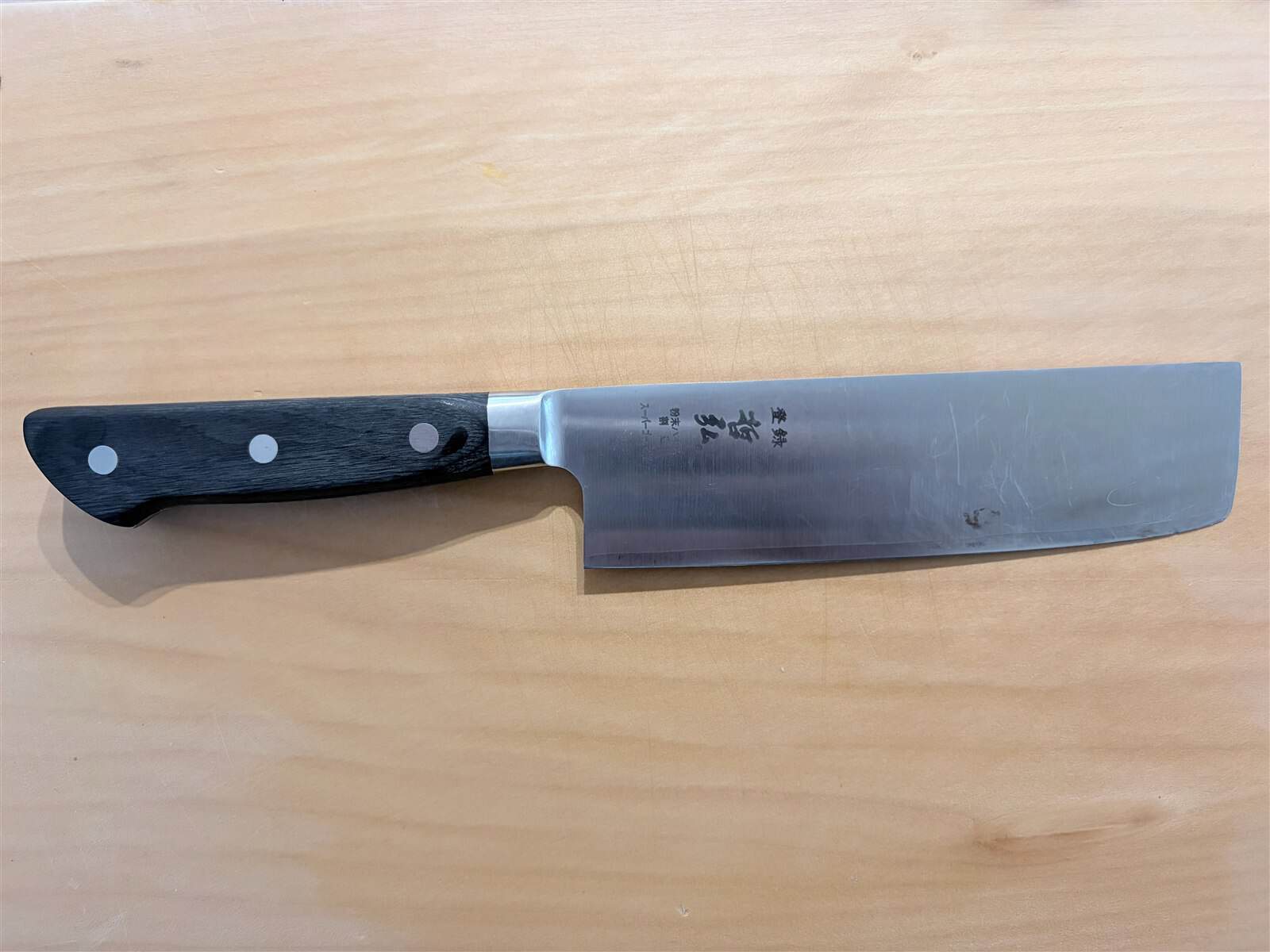
Japan’s Knife Laws for Visitors: What You Can Buy and How to Carry It
There are no affiliate links in this article. How this site makes money.
I am not a lawyer, and this is not legal advice. It is a plain reading of the statute and of what the Tokyo Metropolitan Police publish. Sources are linked at the end. If your situation is unusual, ask the shop or the police, not a blog.
If you are worried that buying a kitchen knife in Japan will get you into trouble, the short answer is that it will not, and the law is more sensible than the rumours suggest.
But almost every English-language mention of Japan knife laws I have seen gets one thing backwards. People repeat a number — usually 15cm — as though it were a limit on what you are allowed to buy. It is not. It comes from a different part of the law entirely, and it has nothing to do with kitchen knives.
Here is what the rules actually say.
The distinction everything hangs on
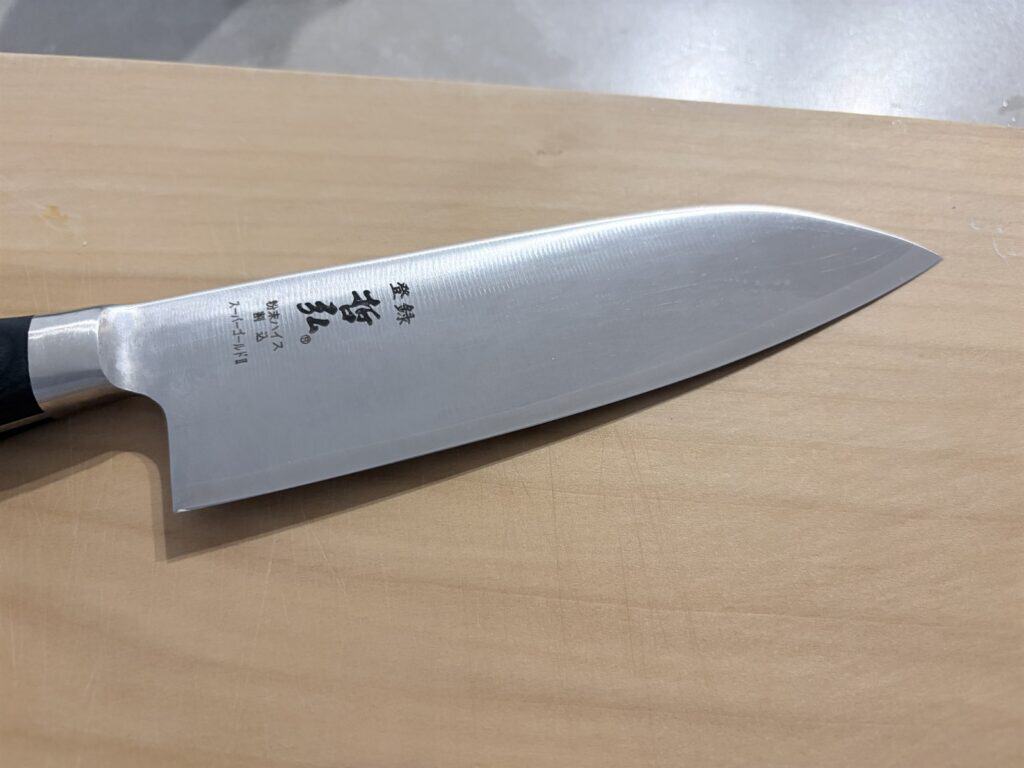
Japanese law treats owning a blade and carrying one as two different things.
Owning — having a knife at home, in your kitchen, in a drawer — is not restricted for kitchen knives at all. Any length. Any number.
Carrying is defined much more narrowly than the English word suggests. The police describe it as having the blade outside your own home or room, in a state where you could use it immediately. That is the thing the law regulates.
Once you have that distinction, everything else falls into place, because every rule below is about carrying.
There is no length limit on the knife you buy
The 15cm figure that circulates in English is real, but it defines swords, not kitchen knives.
Under the Firearms and Swords Control Law, the category translated as “swords and blades” covers things like a katana of 15cm or more, a spear, a naginata, a double-edged dagger of 5.5cm or more, and a switchblade that springs open past 45 degrees. Those are prohibited to own without registration.
A kitchen knife is none of those. A gyuto is not a sword, a santoku is not a dagger, and neither becomes one by being long. You can buy a 210mm gyuto, or a 300mm sujihiki, and owning it is simply not regulated.
So buy the knife you actually want. The length of the blade is a cooking decision, not a legal one. Which knife to buy first is a separate question, and where it was made is another.
What Japan knife laws actually restrict: carrying over 6cm
Here is the one you need.
Article 22 of the Firearms and Swords Control Law says that a blade longer than 6cm may not be carried except for work or another legitimate reason. Breaking it carries up to two years’ imprisonment or a fine of up to ¥300,000.
Note how low 6cm is. It is about two and a half inches. Every kitchen knife you might buy is over it — a small petty knife is 120mm, a santoku is 165mm or 180mm. There is no version of this where the knife you bought falls under the threshold. So the question is never “is my knife short enough”. It is always “do I have a legitimate reason”.
There are narrow exemptions — scissors and folding knives under 8cm, measured the way the regulations specify, plus some shapes named in a cabinet order. None of them will cover a chef’s knife.
Buying a knife and taking it home is a legitimate reason
This is the part that matters, and it is not my interpretation. The Tokyo Metropolitan Police give it as one of their own examples of a legitimate reason: buying a blade and carrying it home from the shop.
The other standard example is work — a chef travelling to the kitchen with their knives.
So the ordinary thing you were going to do anyway, walk out of a knife shop in Kappabashi with a wrapped knife and go back to where you are staying, is exactly the case the police describe as legitimate. Shops in Japan wrap and box knives partly for this reason.
What “carrying” looks like in practice
The law is about a blade being on you, ready to use, out in the world. A knife boxed at the bottom of a suitcase in your room is not that.
Where I would be careful is the gap between “I bought this and I am taking it back” and “I have had this in my day bag for four days while sightseeing”. I could not find an official statement on how long the purchase reason lasts, or on how a hotel room is treated compared with a home. So I am not going to pretend to know.
What I would do, and what costs you nothing:
- Buy the knife, then go back to your accommodation with it rather than carrying on to dinner and a bar
- Leave it boxed and taped as the shop handed it over
- Once it is in your luggage, leave it there until you are packing to fly
- Do not take it out to show people in a restaurant
None of that is a legal requirement I can point to. It is just the version of events nobody would ever have to ask you about.
The one reason that is never accepted
The police are explicit about this: carrying a blade for self-defence is not a legitimate reason.
It does not matter how you feel about it, and it does not matter where you are from. If that is your answer when asked, it is the wrong one, and it is the answer most likely to turn a conversation into a problem.
The second law, which has no length limit at all
There is a smaller statute that catches what the first one does not. Under the Minor Offences Act, carrying a blade concealed, without a legitimate reason, is an offence — and this one has no minimum length. A 4cm blade is covered. The penalty is detention or a small fine.
The practical upshot is the same. A knife in a shop’s box in your bag, bought an hour ago, has a legitimate reason attached to it. A knife tucked inside your jacket does not, whatever its size.
What you cannot buy at all
Almost nothing you would want from a kitchen shop, but for completeness:
- Switchblades that spring open past 45 degrees are in the prohibited category
- Double-edged daggers of 5.5cm or more
- Swords — real katana are legal to own only with a registration certificate, which is a whole separate process, and not something to improvise on a holiday
Kitchen knives, including single-bevel traditional ones, are not in any of these categories.
Getting it out of the country
Different question, different rules, and mostly airline and customs rather than criminal law. The short version: it goes in checked baggage, never in your carry-on, and airport security will find it if you get that wrong.
Frequently asked
Can tourists legally buy kitchen knives in Japan?
Yes. There is no permit, no registration, no length limit, and no requirement to be a resident.
Is there a maximum blade length I am allowed to buy?
No. The 15cm figure people quote defines swords, not kitchen knives.
So what is the 6cm rule?
It restricts carrying a blade over 6cm in public without a legitimate reason. Buying one and taking it home is given by the police as a legitimate reason.
Can I carry the knife around while I sightsee after buying it?
I would not, and I could not find an official statement on how far the purchase reason stretches. Go back to your accommodation, then leave it packed.
Is it a problem to have it in my hotel room?
Having a boxed knife in your luggage is not carrying it in the sense the law describes. I could not find an explicit statement about hotel rooms specifically, so that is as far as I will go.
What if the police stop and ask me?
Say what is true: you bought it at a shop, here is the receipt, you are taking it back to where you are staying. Keep the receipt until you fly. Do not say self-defence.
Sources: Tokyo Metropolitan Police, “About blades” (Japanese) · Firearms and Swords Control Law, Articles 2 and 22 · Minor Offences Act, Article 1.
I am not a lawyer and this is not legal advice. Laws change and enforcement is a matter of judgement on the day. If something here is out of date or wrong, tell me — corrections get published.
Related: Japanese Kitchen Knives: A Complete Buyer’s Guide · Japanese Knife Regions
Last updated: August 18, 2026.