A Japanese Cast Iron Pan, Six Years On — and the Rule I Misread
There are no affiliate links in this article — I have no relationship with anyone who sells this pan. How this site makes money.
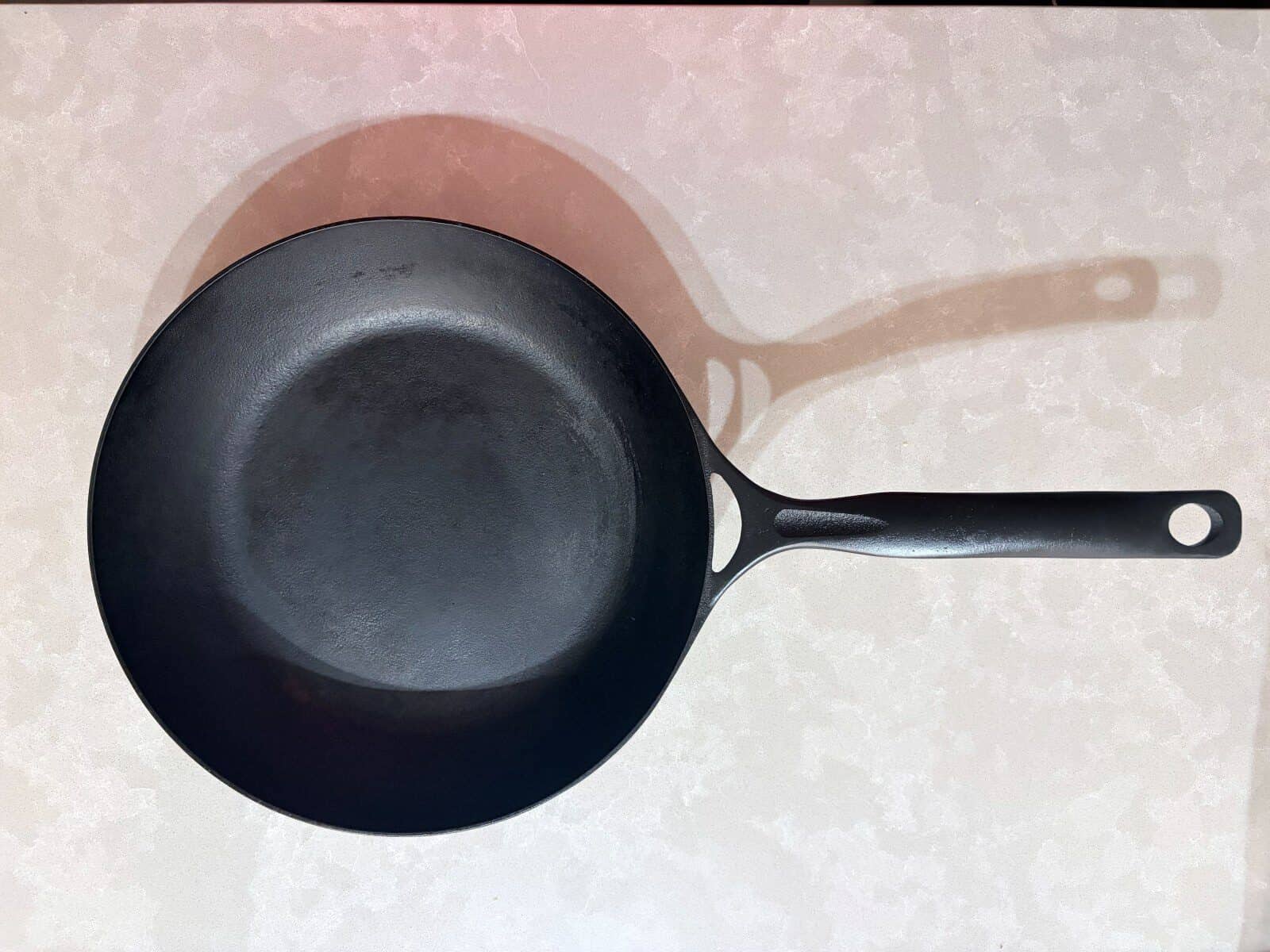
I have cooked on the same japanese cast iron pan since July 2020. Most weeks it comes out more often than not, and in busy stretches it is every day. Stir-fries, meat, eggs, vegetables. It is the pan I reach for without thinking.
For four of those six years I was slowly ruining it, and I was doing it while carefully following the advice — both the advice on the internet and the advice from the maker. I had just misread which part of it mattered.
What this japanese cast iron pan is
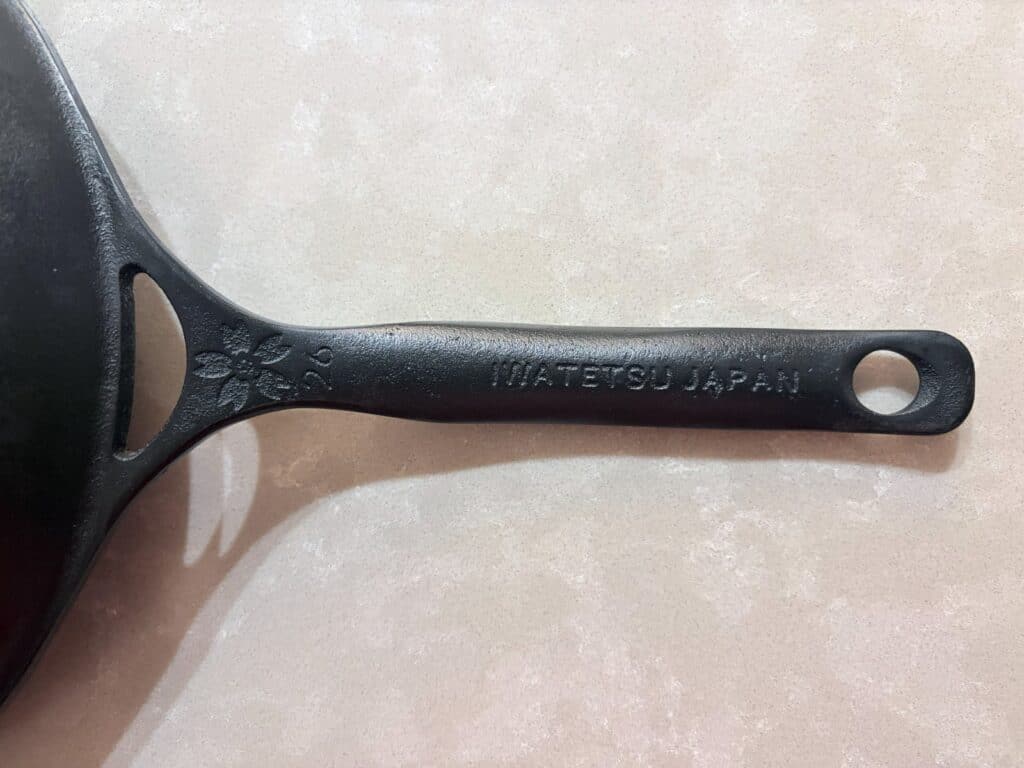
It is a 26cm pan from Iwatetsu, made in Japan, cast in ductile iron rather than the grey cast iron most skillets are made from. Ductile iron is tougher and less brittle, which lets it be cast thinner without cracking.
That matters for one number. Mine weighs 1.1kg. A Lodge 10.25-inch skillet, the closest common equivalent, is 5lb — about 2.27kg. Mine is half the weight of the pan most people picture when you say cast iron.
Six years of near-daily use only happened because of that. I can lift it one-handed, tilt it to move oil around, and put it back without thinking about my wrist. The weight of ordinary cast iron is the reason so many cast iron pans live at the back of a cupboard.
The surface is the other half of the design. It is nitrided and then oxidised: nitrogen treatment hardens the surface so it resists scratching, and an oxide layer on top of that makes the iron itself resistant to rust. The maker’s point is that this replaces a rust-proofing coating — and, in their words, removes the need for the periodic re-oiling an ordinary iron pan demands. The same treatment leaves a fine texture on the surface that oil settles into, which is where the release comes from.
There is no PFAS anywhere in it. The range runs 18cm/580g to 28cm/1.35kg; mine, the 26cm, is ¥18,150 direct from the maker.
Hold on to the “no periodic re-oiling” part. It is the whole story.
Four years of doing it wrong
I oiled it before first use, the way the instructions said.
Then I did what everyone tells you to do with iron. I never used detergent on it, not once, for four years. I had absorbed the rule that soap strips seasoning, and I treated the surface as something precious that I was slowly building up.
Here is what I actually did, though. Because I was avoiding detergent, I also stopped cleaning it properly. I rinsed. I wiped. I did not scrub, because scrubbing felt like the same category of sin as soap.
Those are two different instructions, and I collapsed them into one.
Food and oil went on, cooked, and did not fully come off. The next layer went on top of that. Four years of that is not seasoning — it is a dark, uneven crust, and the pan got worse, steadily and then obviously. A pan I could fry an egg in became a pan that grabbed everything.
By year four I stopped pretending it was fine.
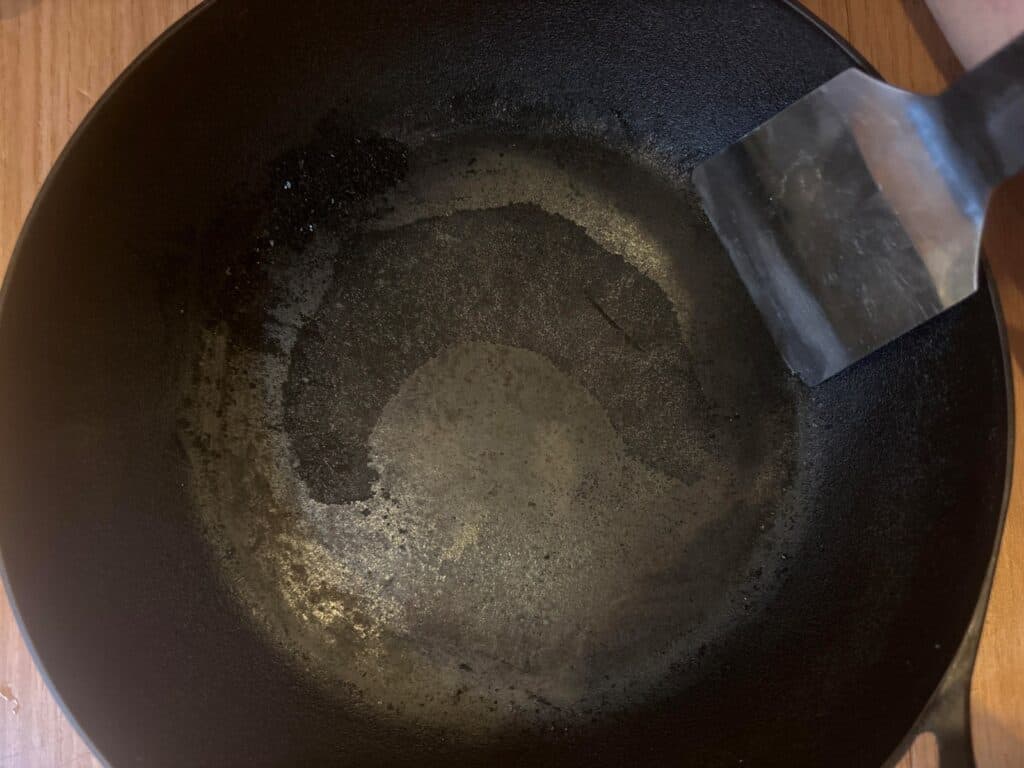
What came off
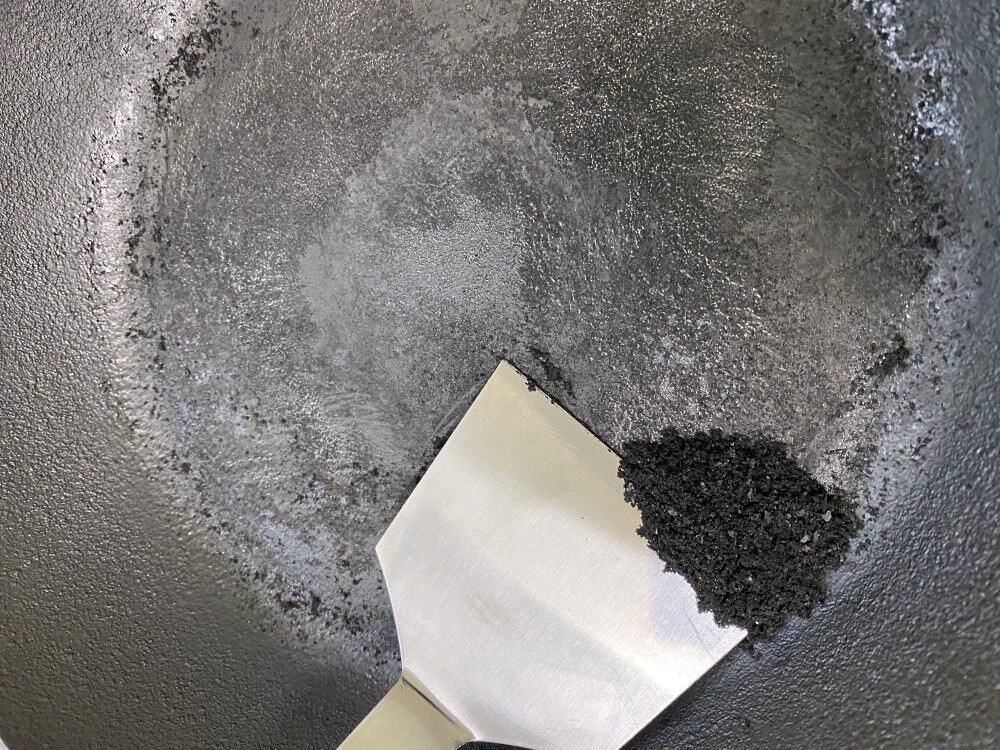
I scraped it back to the metal.
That black material is not seasoning. It is four years of food and oil cooked on layer over layer until it carbonised into something with the texture of coarse grit. It came away in dry black crumbs, and there was an alarming amount of it.
The part I want you to notice: I produced this by being careful. Every layer went on during a period when I thought I was protecting the pan.
The tool that worked
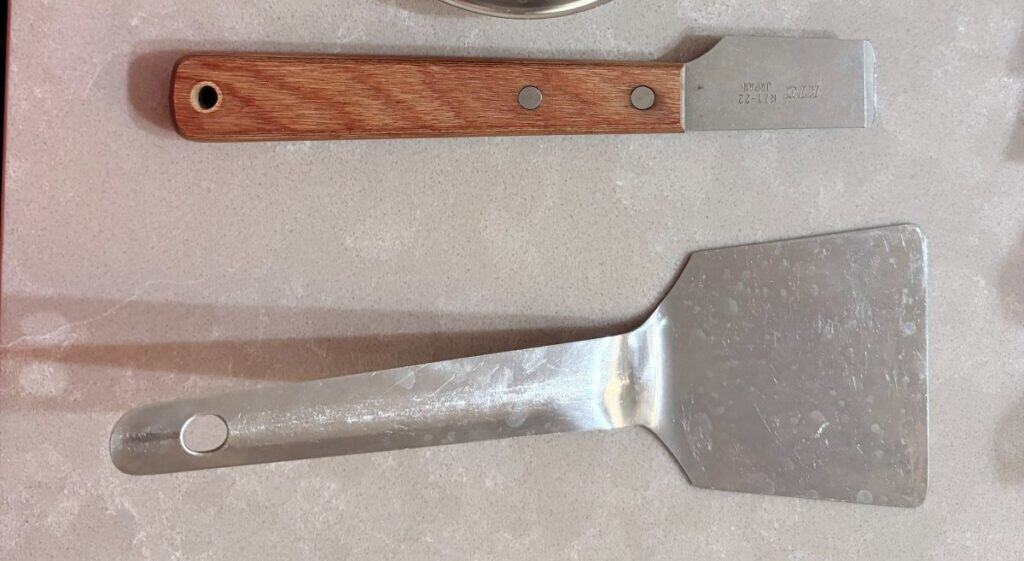
I started with the wide turner I already owned, the flat kind for okonomiyaki. Useless. Too flexible and too broad — I could not put any real force through it, and it skated over the crust.
What worked was a stiff stainless hand scraper with a wooden handle, sold as a workshop tool rather than a kitchen one. Narrow, rigid, takes real pressure without flexing. With that I could get under the layer and lift it.
It took a long time. This was not a ten-minute job — it was a long, boring, arm-aching session working in small sections.
What happened next
I re-oiled it, and the result was startling. Nothing stuck. Not eggs, not fish skin, nothing. It behaved better than at any point since it was new.
If the story ended there, the lesson would be “scrape your pan every few years”. That is not the lesson.
The change that stopped it coming back
After that, I started washing it with detergent and a scrubbing sponge. Every single time, like any other pan.
In the two years since, I have not re-oiled it once. No seasoning routine, no wiping oil on before it goes in the cupboard.
The build-up has not returned. What I get now is an occasional small hard spot after searing meat, which comes off in a few seconds with the scraper. That is the entire maintenance load. The pan is in better condition after two years of detergent than it was after four years of protecting it from detergent.
But I want to be straight about what I can and cannot claim here. I changed two things at once. I started using detergent, and I started actually scrubbing the pan clean. I cannot tell you which one did the work. It is entirely possible the detergent is incidental and the real fix was simply that, for the first time, I was removing the residue.
What the maker actually says
I went back and read the manufacturer’s own FAQ properly, which I should have done in 2020.
They do say they don’t normally use detergent — but they allow it. Their words are that detergent, and even a dishwasher, may be used if you are concerned about cleanliness. They add that if you do use detergent, they recommend re-oiling before the next cook.
And then there is the line that would have saved me four years. They tell you to use a palm-fibre or dedicated brush and remove the residue thoroughly under running hot water — and elsewhere they name the cause of food sticking directly: residue that has not been fully cleaned off.
So the instruction was never “don’t clean it”. It was “clean it without detergent”. I heard the second half and dropped the first.
They also have a name for the reddish-brown discolouration people panic about on these pans: not rust, but protein residue reacting with the iron. Which tells you how routine this problem is.
Why this is not “wash your Lodge with soap”
This is exactly the kind of story that turns into bad advice, so let me put a fence around it.
My pan is nitrided and oxidised. Its rust resistance comes from the treated surface of the iron itself, which is why the maker can say periodic re-oiling is unnecessary. A bare, untreated cast iron skillet is in a different position — there the polymerised oil layer is doing more of the work, and stripping it has consequences mine does not have.
So I am not telling you to take detergent to a bare Lodge. Two narrower things:
- Find out what your pan’s surface actually is before deciding which rules apply. Nitrided, enamelled, bare, factory pre-seasoned — these are different objects, and the advice you read was written for exactly one of them.
- “Don’t use soap” and “don’t clean it” are not the same sentence. Whatever you use, the residue has to come off. Leaving it there is what carbonises.
Where it is now
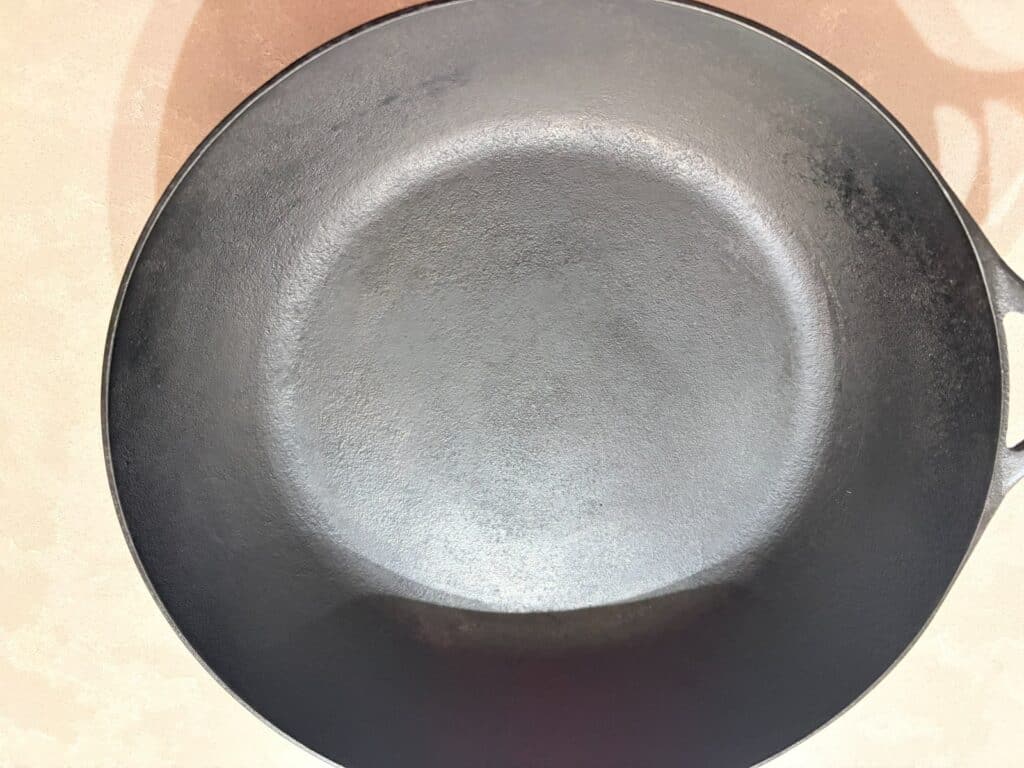
Six years in, the cooking surface is grey-black and slightly mottled, with the cast texture still visible. It looks nothing like the glossy black surface in seasoning guides, and it works better than it did when it looked prettier.
Eggs release completely. The trick is oil in the pan and properly hot before the egg goes in — not a thicker seasoning layer. Meat sticks a little more than it did right after the scrape, and slightly more each year, so a slow build-up is still happening. It is just happening far slower than when I was protecting the pan.
My entire routine: cook, wash with detergent and a sponge, dry with a cloth until there is no visible water. No heating it dry on the burner, no oiling before it goes away. Note that this is less than the maker recommends — they would have me re-oil after detergent. Two years in I have not, and it has been fine. That is one pan and one kitchen, not a controlled test.
What I would tell someone buying one
Buy it if weight is your problem. If you own a cast iron skillet you avoid because lifting it is a chore, half the weight is the specific thing ductile iron solves. Mine gets used constantly because using it costs nothing.
Do not buy it expecting non-stick. It is not. Eggs release because I heat oil properly, not because the pan forgives me.
Read the maker’s instructions, and read all of them. That is the actual lesson of my four wasted years.
On buying one from outside Japan: I checked Iwatetsu’s own shipping policy and it describes domestic Japanese delivery only, with no mention of overseas shipping. That is not the same as a refusal, but I would ask before assuming. Other Japanese makers produce ductile iron pans that do reach overseas retailers, and everything above about weight and surface treatment applies to those too.
Frequently asked
Can you use soap on a japanese cast iron pan?
On mine, which is nitrided and oxidised, the maker explicitly allows detergent and even a dishwasher. They prefer you skip it and recommend re-oiling afterwards if you do. On a bare, untreated pan the answer may be different — check what surface yours has.
What is the black stuff that builds up?
Food and oil cooked on repeatedly until it carbonises. It is not seasoning, even though it is black and hard and sits where seasoning would sit.
How do I get it off?
A stiff, narrow steel scraper and a lot of time. A flexible cooking turner will not do it. Re-oil afterwards.
My pan has gone reddish-brown. Is it rusting?
On this type, the maker says that is usually protein residue reacting with the iron rather than rust. Which is another way of saying: it needs cleaning.
Is ductile iron better than ordinary cast iron?
Not better — lighter. 1.1kg at 26cm against roughly 2.27kg for a Lodge 10.25-inch. Whether that matters depends entirely on whether weight is what stops you using your current pan.
Do you oil it before putting it away?
No. I dry it with a cloth and that is all. Six years, no rust — but that is a nitrided surface doing the work, and I would not assume it carries over to an untreated pan.
Does it work on induction?
The maker lists it as compatible with gas and induction. I cook on gas, so I have not tested induction myself.
Related: How to Season a Donabe (And Which Rules Apply to Yours) · The Copper Tamagoyaki Pan I Wrapped in Newspaper and Forgot
Last updated: August 18, 2026. Found something wrong? Tell me — corrections get published.