The Copper Tamagoyaki Pan I Wrapped in Newspaper and Forgot
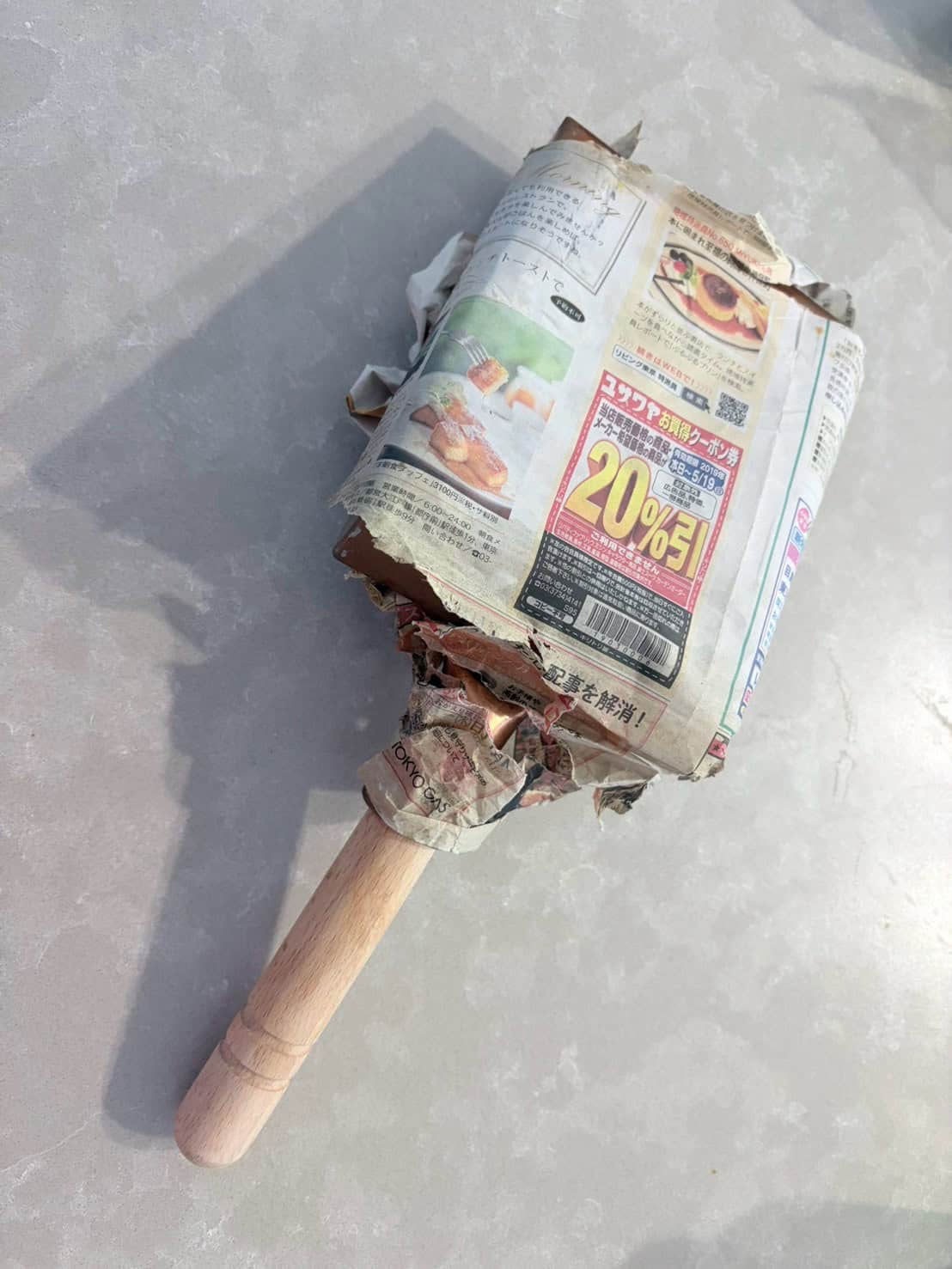
I own a copper tamagoyaki pan. I bought it about five years ago, used it for a while, wrapped it in newspaper, put it away, and did not touch it again for years.
When I unwrapped it the newspaper came apart in my hands and the pan underneath had gone green in places.
This article is what I learned getting it back into service — including the part where I failed. If you are thinking about buying one, the failure is the useful bit.
Why copper, when everything else is cheaper
Tamagoyaki is a stack of thin egg layers rolled onto each other. Each layer sets in seconds. The pan needs to give up heat instantly when you pour, and take it back instantly when you roll, and it needs to do that evenly across a rectangular base with corners.
Copper conducts heat about 1.7 times better than aluminium and roughly twenty-five times better than stainless steel. That is the entire argument. There is no mystique to it — professional kitchens use copper for this pan because the physics of thin-layer egg cookery reward a metal that responds immediately.
Aluminium pans work. Non-stick pans work and are far easier. They are just slower to respond, which means more of the temperature control has to come from you.
If you make tamagoyaki twice a year, buy the cheap one. Copper is for people who will make it often enough to notice the difference, and who accept the maintenance below.
The tin lining, and why it exists
Look inside a copper tamagoyaki pan and you will not see copper. You will see a dull silvery-grey surface. That is tin.
Copper is reactive. Cook something acidic directly on bare copper and you will get metallic flavours and copper leaching into the food. So the cooking surface is lined — traditionally with tin, applied by hand.
Two consequences you need to know before buying:
Tin is soft and melts at a low temperature — around 232°C. That is well within reach of an empty pan left on a burner. Do not preheat a copper pan aggressively with nothing in it.
Tin wears. After years of use the lining thins, and eventually the copper shows through as reddish patches. That is not the end of the pan. Re-tinning is a service that exists in Japan, and a re-tinned pan is functionally new.
How to check yours: a silvery-grey interior means the tin is intact. Reddish-orange patches inside mean copper is exposed.
Years in newspaper
Here is what I did wrong, and it is the single most useful thing in this article.
I wrapped the pan in newspaper before storing it. That felt sensible — it is what things come wrapped in. It is also exactly wrong.
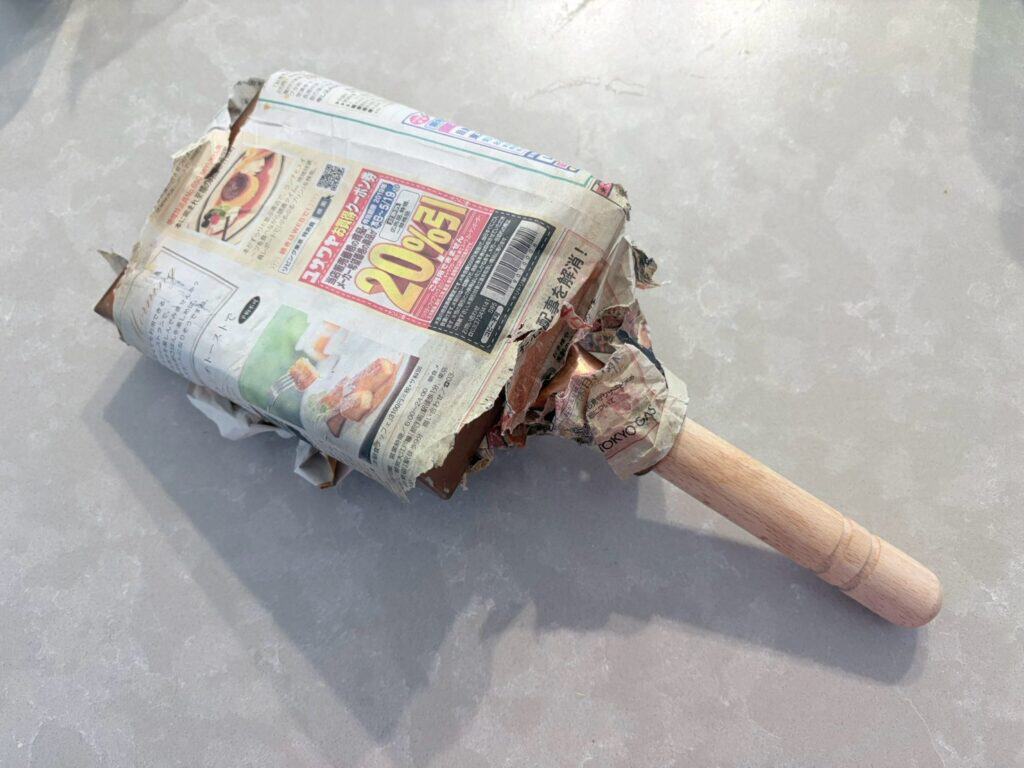
Paper absorbs moisture and then holds it against the metal. Through a run of Japanese summers, that means years of humidity pressed onto a copper surface with no airflow. The newspaper degraded. The pan corroded.
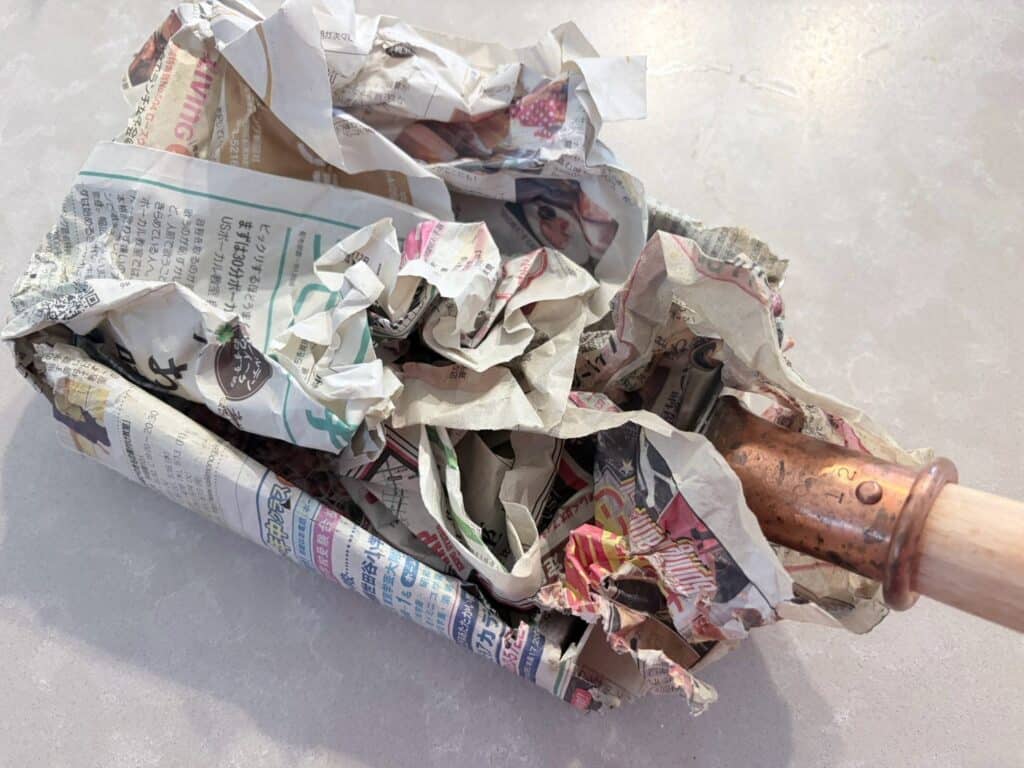
Store copper dry and in open air, or in a loose cloth that breathes. Never sealed, never in paper.
What I found
The exterior copper had darkened, which is normal and expected. The interior — the tin — had picked up scattered green and dark spots.
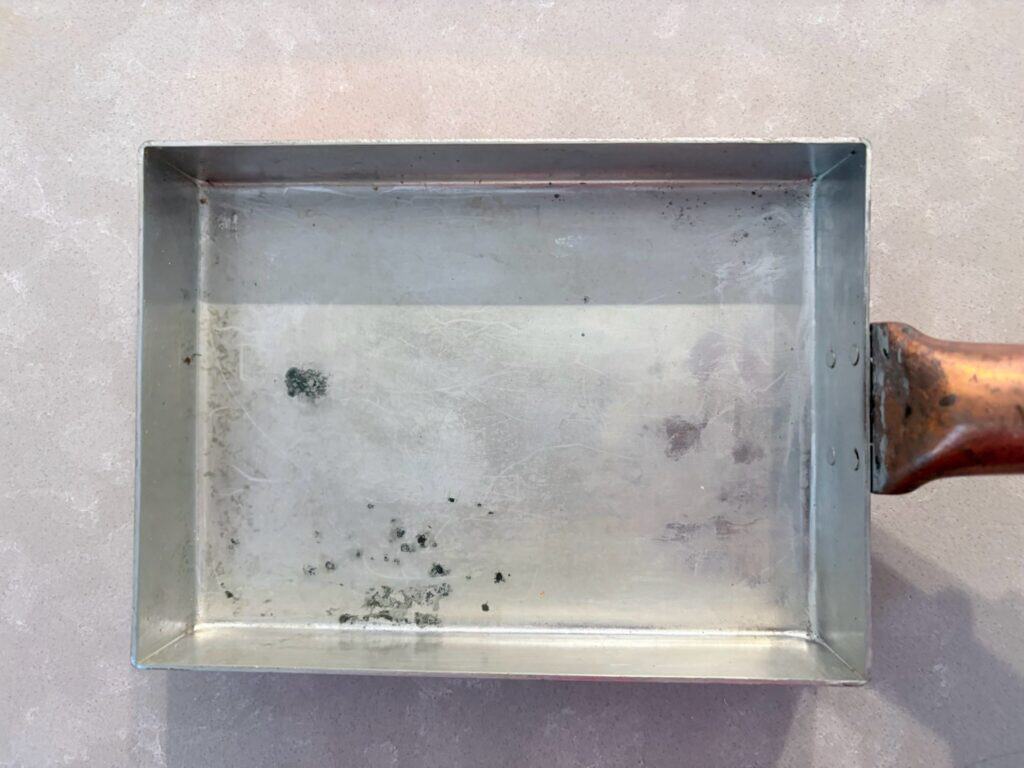
The green is verdigris: basic copper carbonate, formed where copper meets moisture and air over a long time.
The verdigris myth, and what the research actually says
In Japan there is a long-standing belief that verdigris is highly poisonous. Many people will tell you to throw the pan away.
That belief was officially refuted. Japan’s Ministry of Health ran a three-year study into the biological effects of copper oxides beginning in 1981, and in 1984 announced that the “verdigris is highly toxic” claim was mistaken. A separate six-year animal study commissioned from the University of Tokyo’s Faculty of Medicine reached the same conclusion — verdigris is essentially harmless.
Source: Japan Copper Development Association
English-language sources still routinely say verdigris is toxic and the cookware should be discarded. That is not what the research found.
None of which means you cook on it. It is a corrosion product sitting on your cooking surface. Clean it off. Just do not panic about it, and do not throw away a good pan.
What came off
Warm water and mild detergent first, to get the dust and the old oil film off so I could see what I was actually dealing with.
Then dilute vinegar — one part vinegar to one part water — left on the green spots for a minute or two, wiped gently with a soft cloth, rinsed thoroughly. Three rounds of that over an evening.
The verdigris went. Everything green is gone, and it came off more easily than the internet had led me to expect.
A note on technique, because tin is soft. Salt is the usual recommendation for cleaning copper and it works well on the exterior. Do not use it on the tin — the grains are abrasive enough to take the lining with them. Baking soda is gentler if you need mechanical help: apply briefly, rub lightly, rinse immediately, and never let it dry on the surface.
What didn’t come off
Here is the honest part.
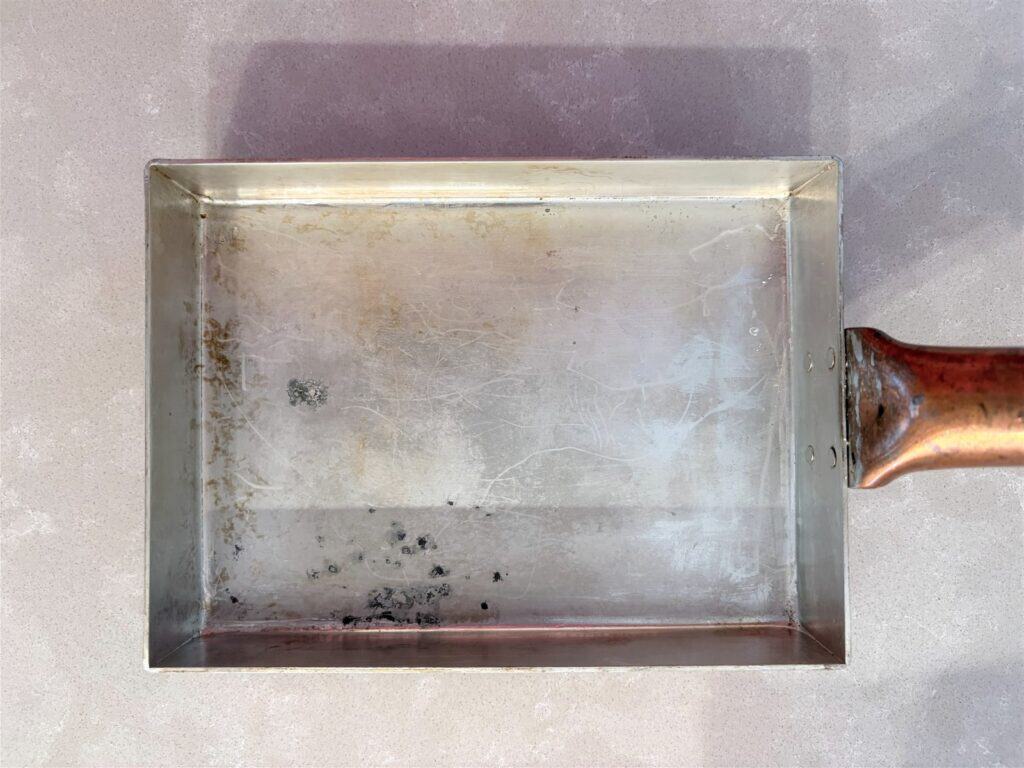
After three rounds, the pan is clean and the verdigris is gone. It also still has dark spots scattered across the tin, brown discolouration around the edges, and a lot of fine scratches. Repeated cleaning did nothing to any of it.
That is because those marks are not verdigris. They are some combination of:
- Pitting, where copper corroded at pinholes in the tin and left a mark underneath
- Polymerised oil from years of cooking, carbonised into the surface
- Heat discolouration of the tin itself, which is permanent
None of it comes off, because none of it is a deposit sitting on top. It is the surface, changed.
And that is fine. I spent an evening trying to return the pan to how it looked new, which was the wrong goal from the start. Walk into a professional Japanese kitchen and the copper pans are mottled, dark, and uneven. That is what a used tin surface looks like.
The question that matters is not whether it is pretty. It is whether the tin still covers the copper. On mine it does, across the whole cooking surface. So the pan works, and the marks are a record of it having been used.
If you genuinely want it to look new, cleaning will not get you there. Re-tinning will.
Kanto or Kansai
Two regional shapes, and nobody tells you before you buy.
Kanto style is rectangular — longer than it is wide. It is the more common shape and the easier one to learn on, because the roll travels along the long axis and you get more attempts per layer.
Kansai style is square. It produces a differently proportioned roll, and it is what you want if you are following Kansai-style recipes closely.
Mine is Kanto. If you have no strong preference, get the rectangular one.
What it is actually like to cook on
The first thing you notice is the response time. Turn the heat down and the pan is cooler almost immediately. There is none of the lag you get from a thick stainless base, where you move the dial and then wait to find out whether it worked.
That responsiveness is the whole selling point. It is also the difficulty, and I found out which by making dashimaki — the version with a lot of dashi folded into the egg.
Dashimaki sets slowly, because it is carrying that much liquid. So you wait. And waiting on a pan that obeys you instantly is uncomfortable, so you nudge the heat up. The pan does exactly what you asked, immediately, and the layer goes from not-set to overcooked with very little in between.
A slower pan would have absorbed that impatience. Copper does not. It gives you precise control and then holds you to it — which is a fair description of every responsive tool, and worth understanding before you buy one.
Living with one
Never put it in the dishwasher. Detergent strips tin and the heat is a risk to the lining.
Never heat it empty on high. Tin melts at a low temperature and you can damage the lining before you notice.
Wash by hand, dry immediately. I put mine back on a low burner for a few seconds after towelling to drive off the last of the moisture. This is the step that actually prevents the problem this whole article is about.
Wipe a thin film of cooking oil on the inside before storing.
Store it dry and in the open. Not in paper. Not sealed in a box.
That is the entire maintenance routine, and it takes under a minute. Skipping it for a few years cost me an evening of scrubbing and a permanently marked pan.
Frequently asked
Is a copper tamagoyaki pan worth it over aluminium?
If you make tamagoyaki regularly, yes — the response time is genuinely different. If you make it occasionally, no. Buy aluminium and spend the difference on something you will use.
Is verdigris dangerous?
The Japanese government study concluded it is not highly toxic, contrary to the common belief. Clean it off anyway before cooking. It is corrosion, not seasoning.
How do I know if the tin has worn through?
Reddish-orange patches inside, against the silvery-grey. If the exposed area is small and you avoid acidic cooking, it is not urgent. Re-tinning is the proper fix.
Can I use metal utensils?
No. Tin is soft. Wood or silicone.
What if I already stored mine in newspaper?
Unwrap it, wash it, dry it properly, and change how you store it. The damage from a few years is mostly cosmetic. Mine still works.
Related: How to Season a Donabe (And Which Rules Apply to Yours) / a japanese cast iron pan after six years
Last updated: 16th August, 2026. If something here is wrong, tell me — corrections get published.