Donabe vs dutch oven: a six-piece stainless set nested with the handles removed
There are no affiliate links in this article — I have no relationship with anyone who sells these. How this site makes money.
Most donabe vs dutch oven comparisons are written by someone who owns one of the two. I own both, plus three other things that compete with them for the same burner, and I have had the two oldest for ten years.
Here is the finding I did not expect. The most expensive and most famous pot in my kitchen gets used about ten times a year. The one I reach for almost daily is a brand most English-speaking cooks have never heard of. It took me most of a decade to work out why, and the answer is not the material, the price, or the cooking performance.
What is actually in my kitchen
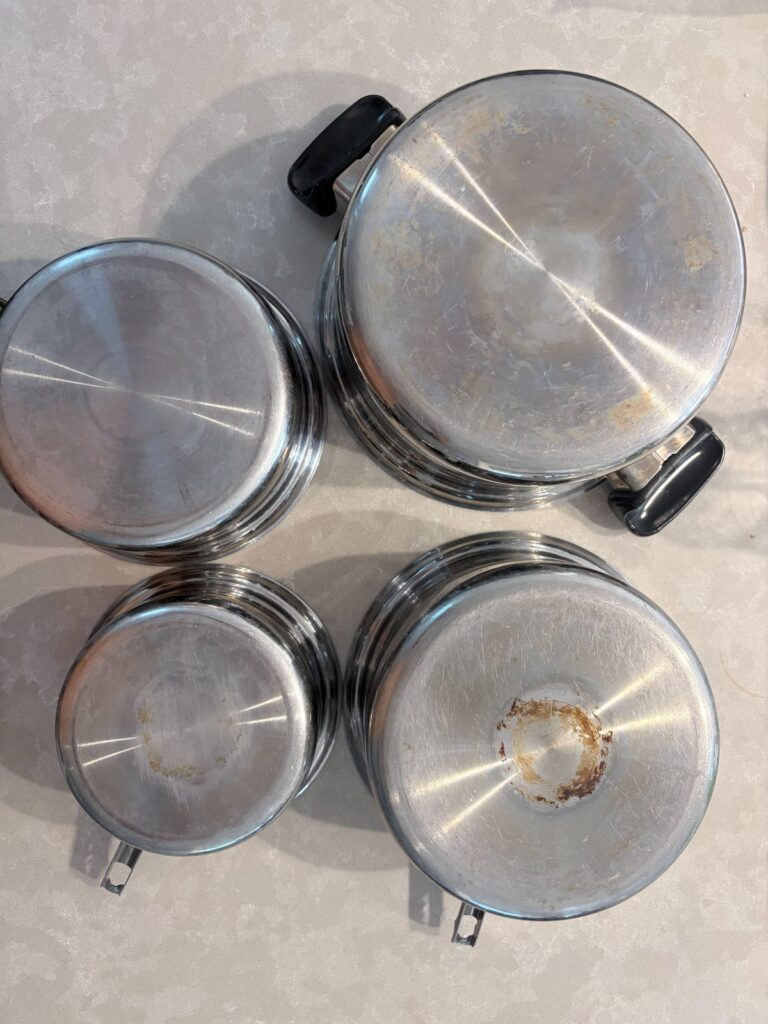
Nothing below is borrowed, sent to me, or judged from a spec sheet. These are the pots I cook with.
| Pot | Material | Capacity | Weight |
|---|---|---|---|
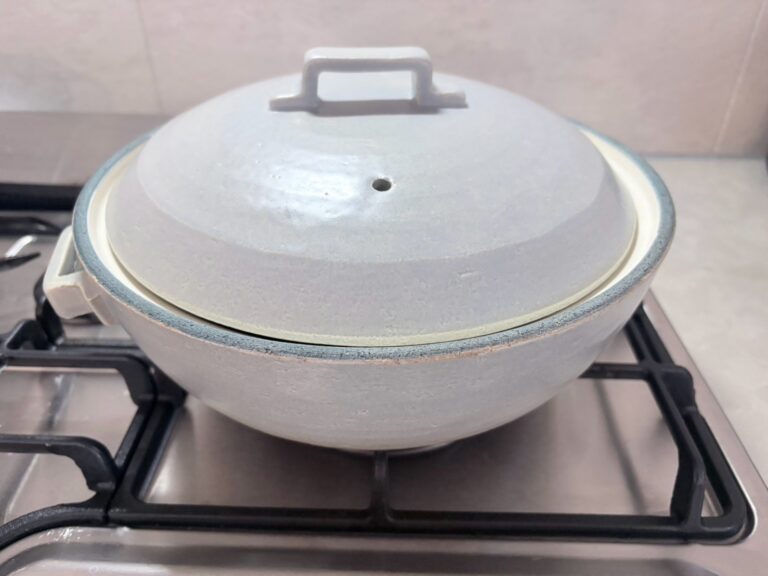
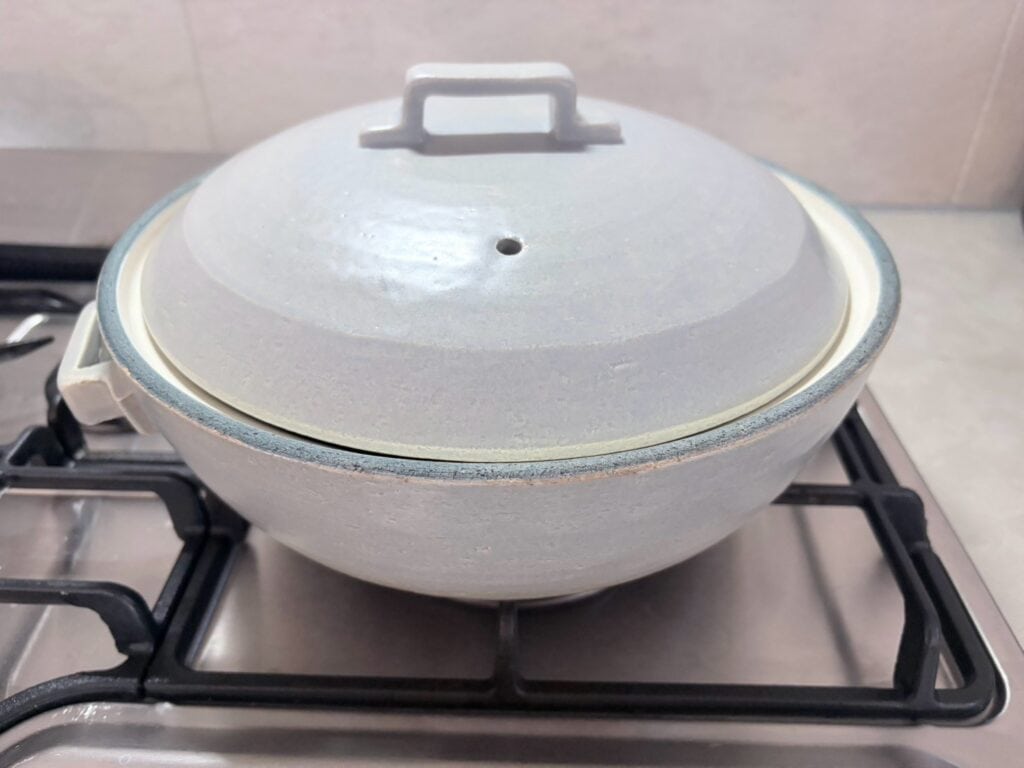
| Banko-ware donabe, 9-gō | glazed clay | 3.0L | 2.75kg |
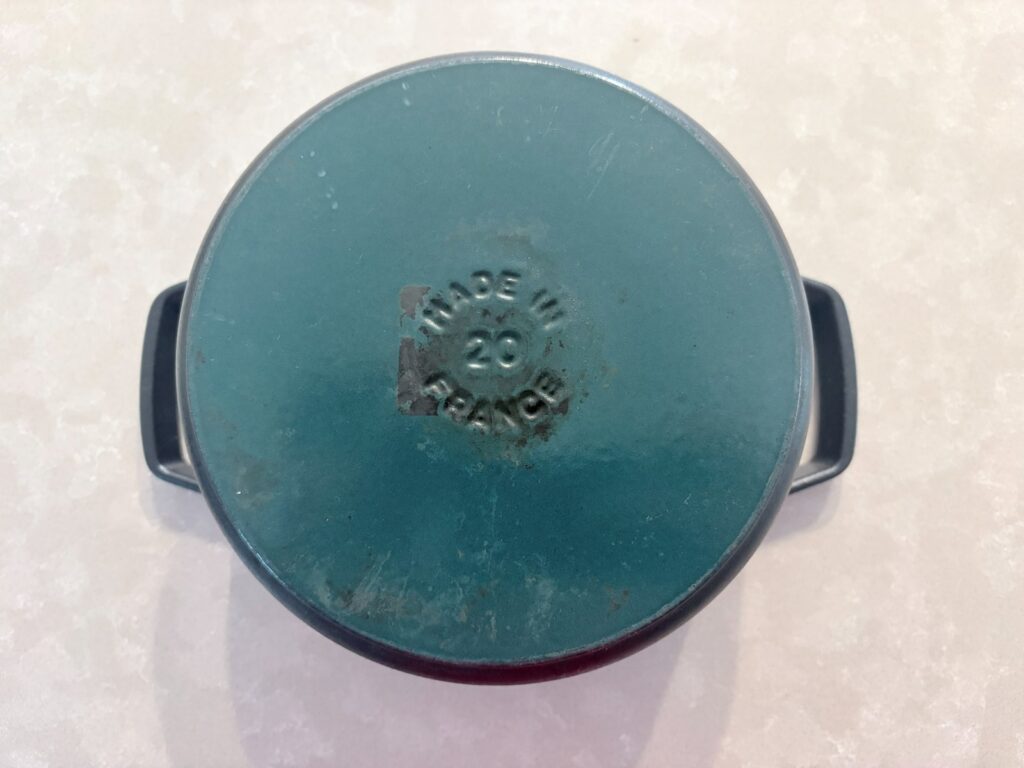
| Staub La Cocotte, 20cm | enamelled cast iron | 2.2L | 4.05kg |
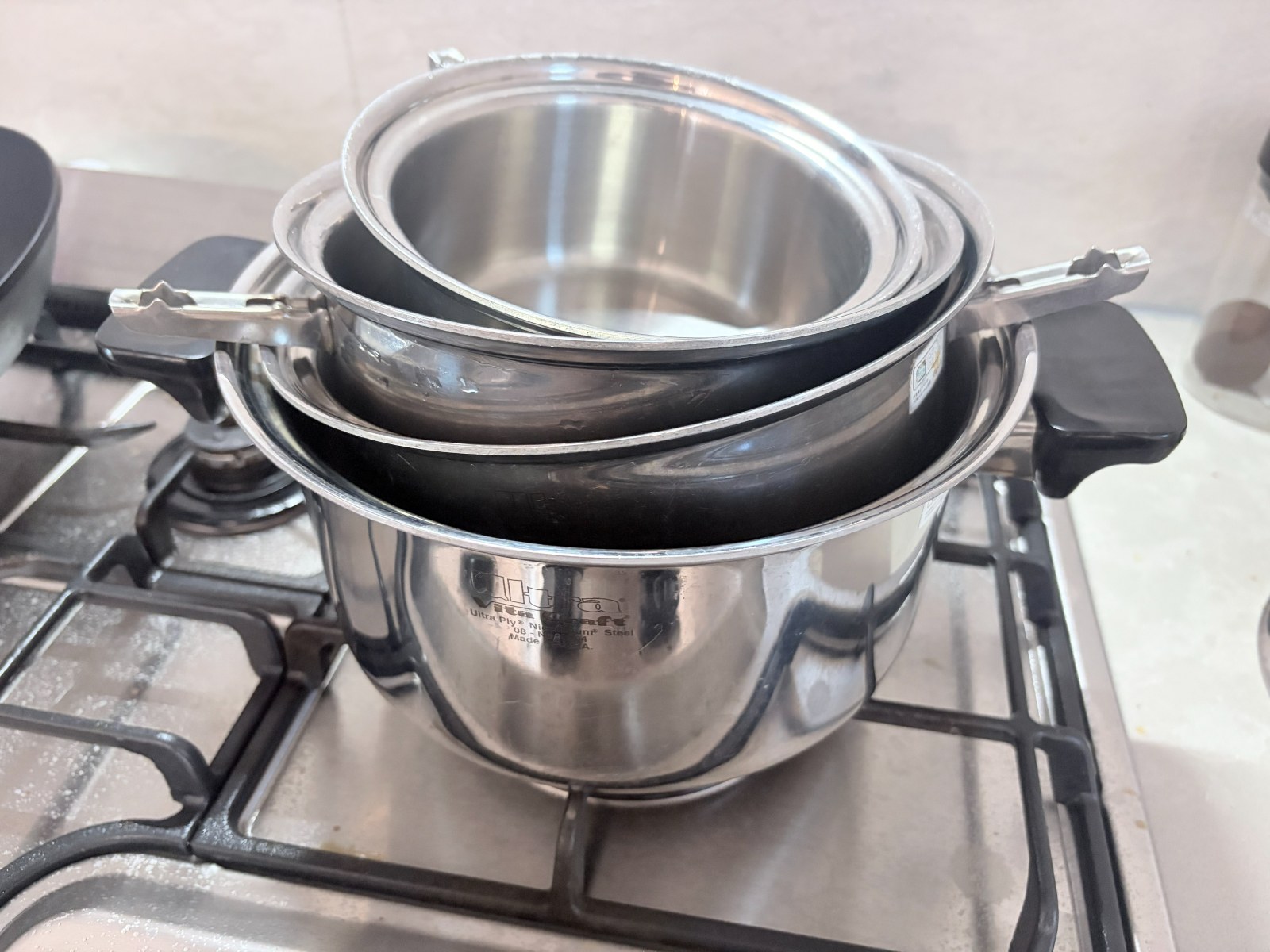
| Vitacraft Ultra, six pieces | nine-ply stainless | 1.2–5.5L | 1.53kg (the 19cm) |
| WMF Fusiontec, 24cm | steel with a mineral surface | 6.6L | 3.0kg |
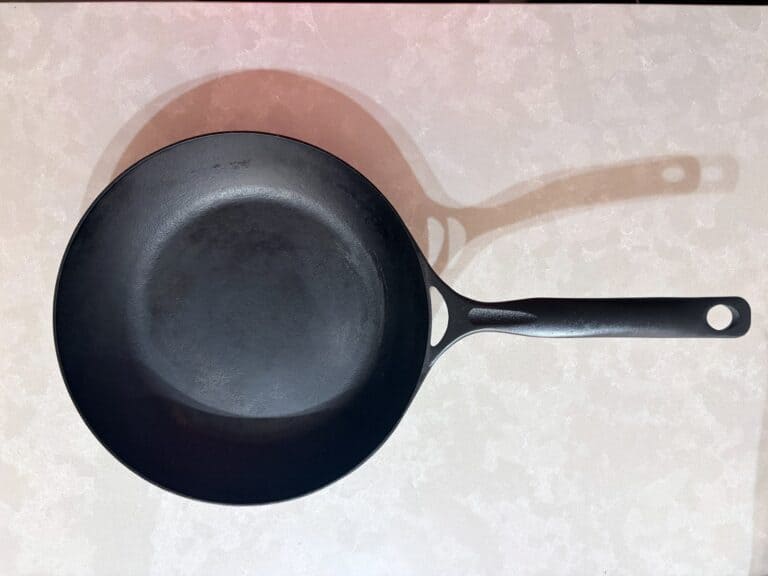
| Iwatetsu ductile iron pan, 26cm | nitrided ductile iron | — | 1.1kg |
One disclosure. The Staub was a wedding present from my sister in 2016, so I did not choose it and did not pay for it. I can tell you what ten years have done to it and whether it earns its current price. I cannot tell you what it feels like to decide to spend that money.
The number that settles it
Look at two rows of that table again.
Staub, 20cm: 2.2 litres, 4.05kg.
Vitacraft, 19cm: 3.0 litres, 1.53kg.
The stainless pot holds more and weighs less than half. Not a little less. A third of the weight for a larger pot.
That is the entire explanation for a decade of my behaviour. When I want to cook something, my hand goes to the pot I can lift with one arm, tilt to pour, and put back in a cupboard above my head. Ten years of small decisions, none of them conscious, all of them going the same way.
The Staub is the better pot at what it is for. Cast iron holds heat in a way stainless simply does not, the enamel is still perfect after ten years, and nothing browns a piece of meat like it. None of that matters on a Tuesday when I am making soup and it weighs four kilos.
I wrote almost exactly this about a Japanese iron pan that weighs 1.1kg. The lesson keeps arriving: the best pot you own is not the one you use. The one you use is the one that costs you nothing to pick up.
Donabe vs dutch oven: what each one actually does
If the whole argument were weight, I would own stainless and nothing else. It is not.
A donabe goes on the table and belongs there. That sounds like decoration and it is not. Hot pot is a way of eating where everyone cooks from the same vessel over an hour, and a Dutch oven on a trivet in the middle of the table looks like cookware that has been carried in. The donabe looks like dinner.
Fired clay holds a gentle heat after the flame is off in a way that suits that hour of eating. Cast iron holds more heat, but it holds it harder — it keeps boiling when you want it to stop.
And it cooks rice differently. I do not own a rice donabe, so I am not going to pretend to judge that. The pot most people mean when they say donabe is a rice cooker, and that is a different tool again.
What a donabe will not do: go in the oven, brown anything properly, or survive being treated casually. It also cannot be stacked, which brings me to the thing nobody puts in these comparisons.
The question nobody asks: where does it live
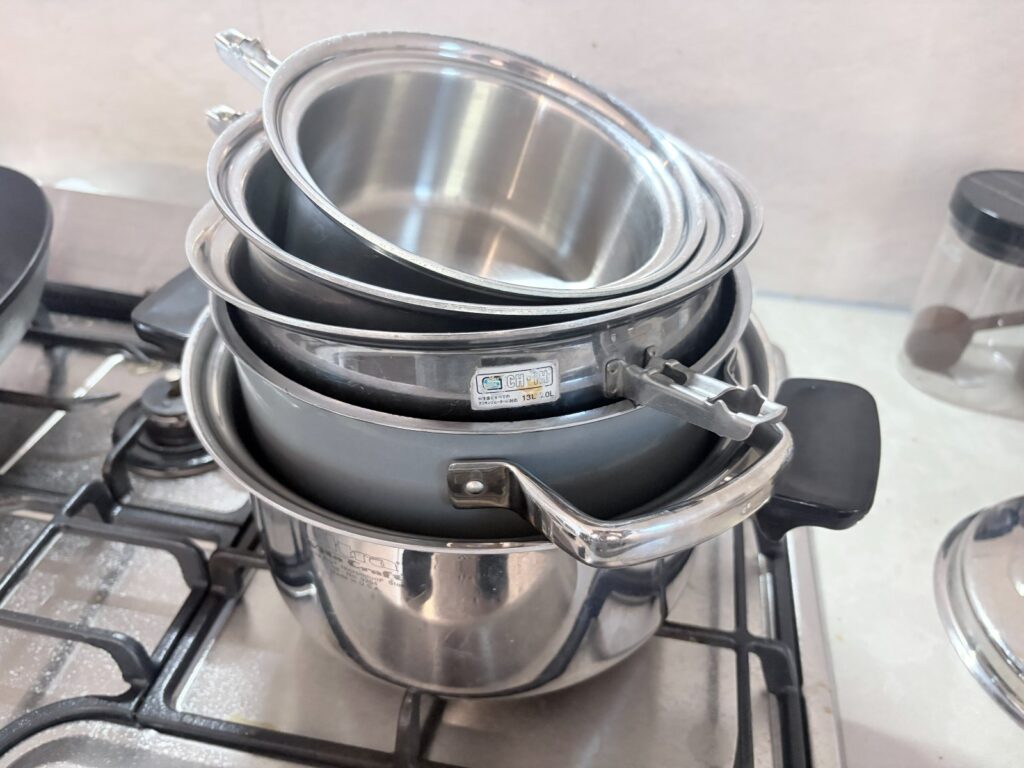
Every comparison I have read discusses heat retention. None of them discusses the cupboard.
The Vitacraft handles come off. Press a button, the handle detaches, and six pots nest inside each other. That is the entire reason a six-piece set is livable in a normal kitchen.
Two honest qualifications. The metal lugs the handles clip into stay on the pot, so the stack is not perfectly flat — it is a column with small ears sticking out of it.
And a fixed handle changes the shape of the problem rather than ending it. The WMF does nest — it drops in just inside the largest Vitacraft — but its handle is welded on, so it projects sideways and stays there. The stack survives. It stops being a rectangle. In a cupboard measured in centimetres, that projecting handle is the thing that decides whether the door closes.
The Staub and the donabe do not stack at all. Each occupies its own footprint, permanently. A 20cm Staub takes the space of a 20cm Staub for ten years whether you cook with it or not.
If you live somewhere with a large kitchen, ignore all of this. If you are choosing between a donabe and a dutch oven in an apartment, storage is a real cost and it is paid daily, while the cooking advantage is collected occasionally.
Where the Staub actually sits, after ten years
The enamel is unmarked. The brass knob has dulled to a colour I like better than new. Nothing has chipped, and I have not been careful with it. On durability, the reputation is entirely deserved — ten years of intermittent use and it looks like it could do fifty more.
It gets used about ten times a year. Roughly a hundred times in a decade. Braises in winter, a stew when people come over, occasionally bread.
Is it worth its price? Yes, if that is your cooking. A Staub in this size is a serious amount of money, and for a hundred uses that is a lot per meal — but it will outlive me, and there is nothing else that does what it does. What I would question is the size. I would want a bigger one, because the jobs I use it for are the jobs where I am cooking for people, and 2.2 litres runs out fast.
That is a real recommendation and it took ten years to have it: if you buy one of these, buy it larger than you think. The weight penalty is already paid at 20cm.
A note on names
The WMF is Fusiontec Mineral, and I bought it partly because I had absorbed the idea that this had something to do with nutrition.
It does not. The name describes what the surface is made of — around thirty natural minerals fused at high temperature into a single layer — not something that transfers into your food. It is a material name, not a health claim.
I mention it because I made the mistake myself, and because the same thing happens with donabe seasoning and with cast iron. The words that come with cookware are frequently describing the object rather than promising you a benefit, and a surprising amount of confusion lives in the gap.
For what it is worth, it is the pot I reach for when something spits — deep frying, or a big batch of miso soup for the week. 6.6 litres and tall sides.
So which should you buy
Buy a dutch oven if you braise, if you want one pot that goes from hob to oven, and if you have somewhere to put it. It is the most versatile object here and the enamel will outlast you. Buy it a size up from what feels right.
Buy a donabe if the picture in your head involves a table rather than a stove. Nothing else does that, and if you have decided you want that kind of meal, no amount of cast iron substitutes.
Buy neither, yet, if what you actually need is a pot you will use on a Tuesday. That is a lighter, duller, less photogenic object, and it will get more use in a month than either of these gets in a year.
The honest ranking by how often my hand reaches for them, after ten years:
- Stainless, every day
- Iron pan, most days
- German steel casserole, weekly-ish
- Donabe, weekly in winter and never in summer
- Staub, ten times a year
That order is almost exactly the reverse of how impressive they are.
Frequently asked
Is a donabe better than a dutch oven?
For hot pot at the table, yes, and nothing substitutes. For braising, roasting, bread or anything going in an oven, no. They overlap far less than the comparison implies.
Can I use a dutch oven instead of a donabe?
For the cooking, mostly. For the eating, no. If you want the pot in the middle of the table, that is what a donabe is.
Is Staub worth the money?
On durability, yes without hesitation — ten years and mine is unmarked. Whether it is worth it to you depends on how often you will lift four kilos. Mine earns its place about ten times a year and I still think it was a good thing to own.
What size Staub should I buy?
Bigger than you think. The weight is the barrier and it barely changes between sizes, so you may as well have the capacity.
Does a donabe need special care?
It depends on whether yours is glazed or unglazed, and most English-language advice was written for the unglazed kind. The full answer is here.
What about induction?
The Staub and the stainless work on it. Clay does not, unless the pot is specifically built for it — and “IH compatible” on a donabe listing needs checking rather than trusting.
Related: Best Donabe: 3 Things to Decide Before You Buy One · How to Season a Donabe · A Japanese Cast Iron Pan, Six Years On
Last updated: August 19, 2026. Found something wrong? Tell me — corrections get published.