Best Donabe: 3 Things to Decide Before You Buy One
There are no affiliate links in this article — I have no relationship with anyone who sells donabe. How this site makes money.*
Search for the best donabe in English and you will get one answer, over and over: a Kamado-san from Nagatani-en. Iga ware, double lid, and it cooks rice beautifully.
It is a genuinely good pot. It is also a rice cooker, it only works on a naked flame, and it is not what I own.
I should be straight about my position before you read any further. I have one donabe. I have not cooked on eleven of them and ranked them, and any article claiming to have done that with clay pots is worth a raised eyebrow.
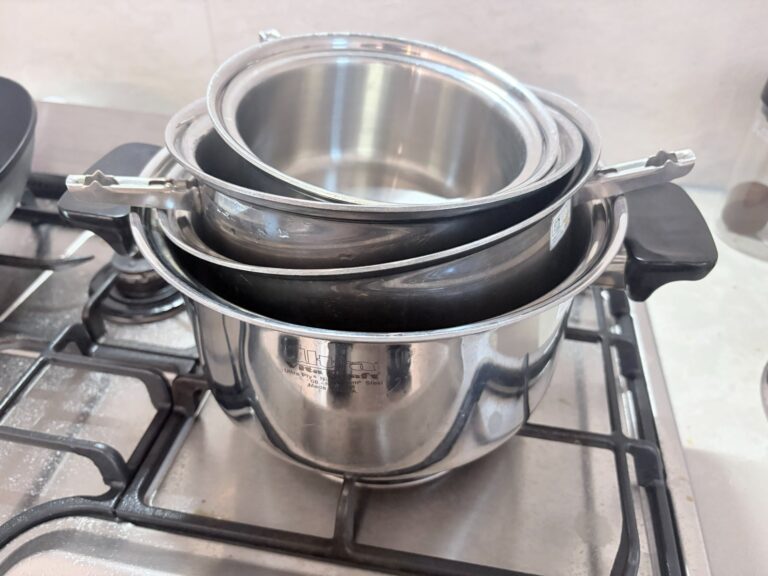
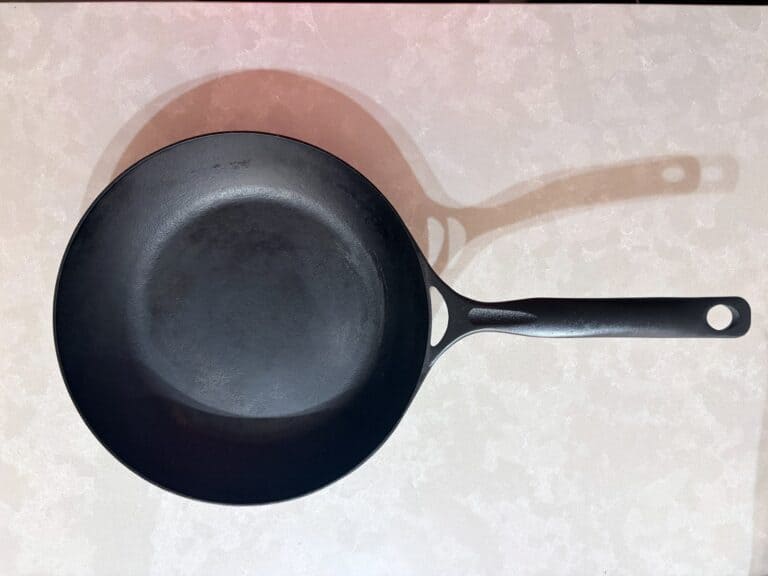
What I do have is the rest of the kitchen it has to compete with — a Staub, a six-piece Vitacraft set, a German steel casserole, a Japanese iron pan — all in regular use. So while I cannot rank donabe against each other, I can tell you exactly where a donabe wins against everything else on the shelf, and where it does not. Then I will tell you what I own, why, and where it falls short.
The pot everyone recommends, and what it is for
Nagatani-en have been making pottery in Iga since 1832, and the Kamado-san is their famous one — over a million sold, a Good Design Long Life award, and a permanent place on every English-language list.
Its double lid traps and circulates steam, which is the entire point: it is built to cook rice. People use it for other things, but the design is aimed at one job and it does that job better than a pot which is trying to do five.
Two things about it decide whether it belongs on your list at all.
The price outside Japan is not the price in Japan. TOIRO, who have been selling donabe in the United States since 2008 and are the longest-running overseas source, list it around $180–250 shipped domestically. The same pot in Japan starts at about ¥16,500 for the 3-gō size — roughly $110. You are paying for the ocean, the importer and someone who will answer the phone when your pot cracks, which is a reasonable thing to pay for. It is worth knowing you are paying it. (If you are coming here anyway, the law on carrying a knife home applies to pots too — nothing to declare.)
It does not work on induction or electric. Direct flame only. That eliminates it for a large number of the people reading English-language donabe guides, and it is usually mentioned three-quarters of the way down the page, if at all.
Decision 1: rice, or everything else
This is the fork that decides the rest.
A rice donabe — Kamado-san and its relatives — has a heavy double lid and relatively tall, narrow proportions. It is optimised for the burst of steam and the rest period that makes good rice. You can cook other things in it. It is not what it is for.
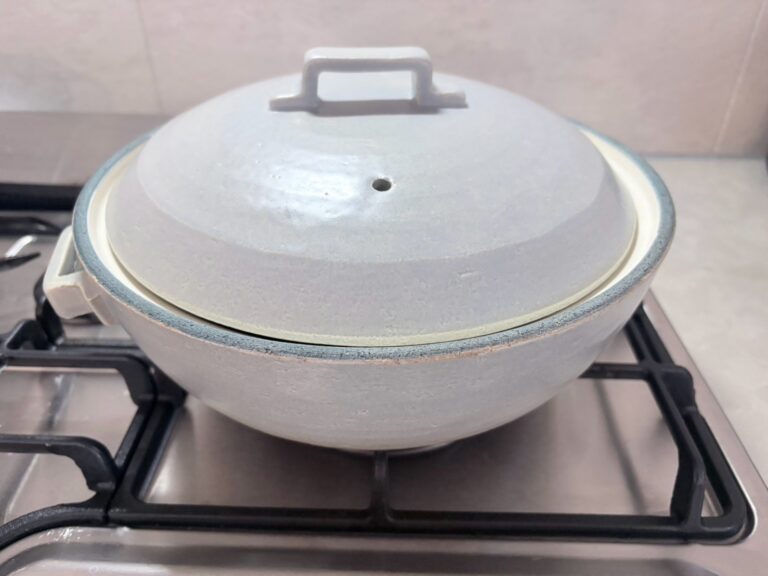
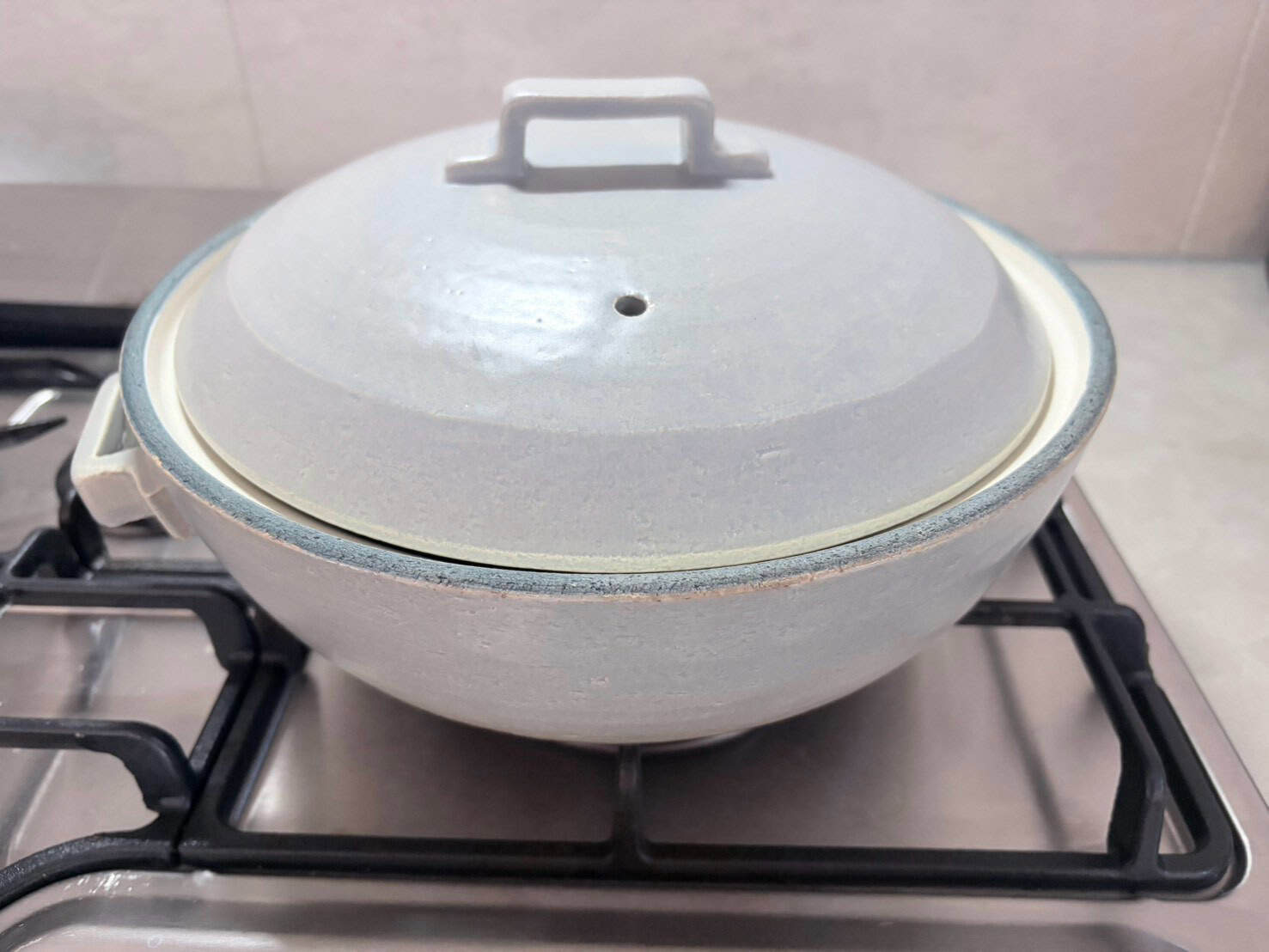
A hot pot donabe is wide and shallow with a single lid, made to sit on the table with a burner under it while several people eat out of it. Mine is this kind. In winter it does nabe, zosui and udon, and it is on the table rather than the stove.
If you want one pot to do both, understand you are compromising on one of them. If what you actually pictured was a table full of people eating from a steaming pot, do not buy a rice cooker because a list told you to.
Decision 2: what your cooktop is
This eliminates more options than anything else, and English-language guides consistently bury it.
Traditional donabe are for naked flame. Clay is not magnetic and does not heat on induction. That is physics, not a product limitation.
Manufacturers get around it in two ways. Some embed or supply a steel heating plate; those are sold as IH-compatible. Others simply are not compatible at all — the Kamado-san is in this group.
If you have an induction or electric hob, check before you fall in love with a pot. And check specifically: “IH compatible” on a listing can mean a separate plate is involved, and a plate that does not attract a magnet will not heat. I go into that in detail — including the disc that came with mine and turned out not to be the heating plate at all — in the piece on seasoning and living with a donabe.
Decision 3: glazed inside, or not
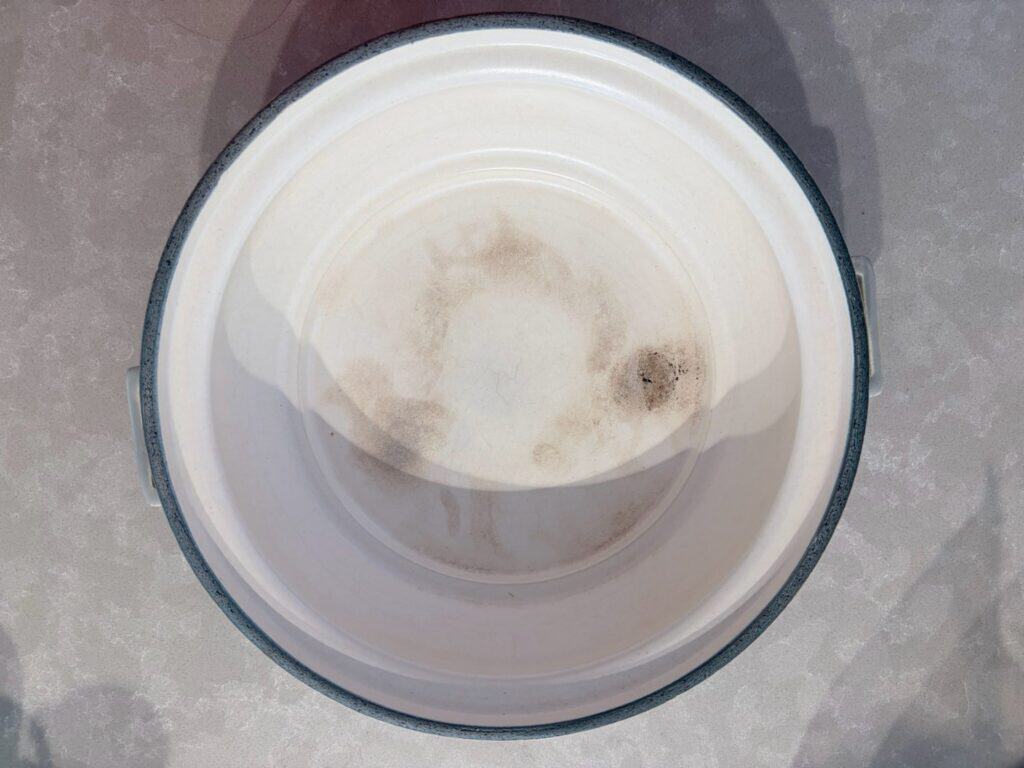
Turn any donabe over and look at it, then look inside. This decides how much work you are signing up for.
Unglazed or partly unglazed clay is the traditional construction, and it is porous. It wants seasoning before first use, it does not want detergent, it must not soak, and it has to dry completely before it goes away. That is not fussiness — the clay genuinely absorbs what you put on it.
A glazed interior is sealed. Mine is white-glazed inside and bare clay underneath, and in practice that means I wash the inside with detergent, soak it when something burns on, and have had no problem in two winters of doing so.
Most people buying their first donabe today are buying a glazed one without realising the care instructions they are reading were written for the other kind. If you know you will not maintain a pot carefully, buy glazed and stop feeling guilty about it.
Do you actually need one?
A fair question, and I will answer it against my own cupboard rather than in the abstract.
I own a Staub, a six-piece Vitacraft set and a German steel casserole. Every one of them will simmer a stew better than my donabe does, and most of them are easier to look after. What none of them does is come to the table and belong there, hold a gentle simmer for twenty minutes after the burner goes off, or let four people eat out of the same vessel without it looking like a saucepan on a trivet.
If you make hot pot twice a winter, use what you already have. A Dutch oven will get you most of the way. But if the picture in your head is the table rather than the stove, that is the specific thing a donabe is for, and nothing else in my kitchen replaces it.
What I actually own, and what is wrong with it
Mine is a Tstyle IH from Tojiki Tonya — Banko ware, 9-gō, about 3 litres, 24cm across inside, 2.75kg. Banko accounts for something like 80% of Japan’s donabe production, so this is the ordinary domestic product rather than the artisan one.
What is good: it is glazed inside, so upkeep is genuinely light. It is the right shape for hot pot. It has been through two winters at once or twice a week with crazing in the glaze but no cracks and no leaks.
What is not:
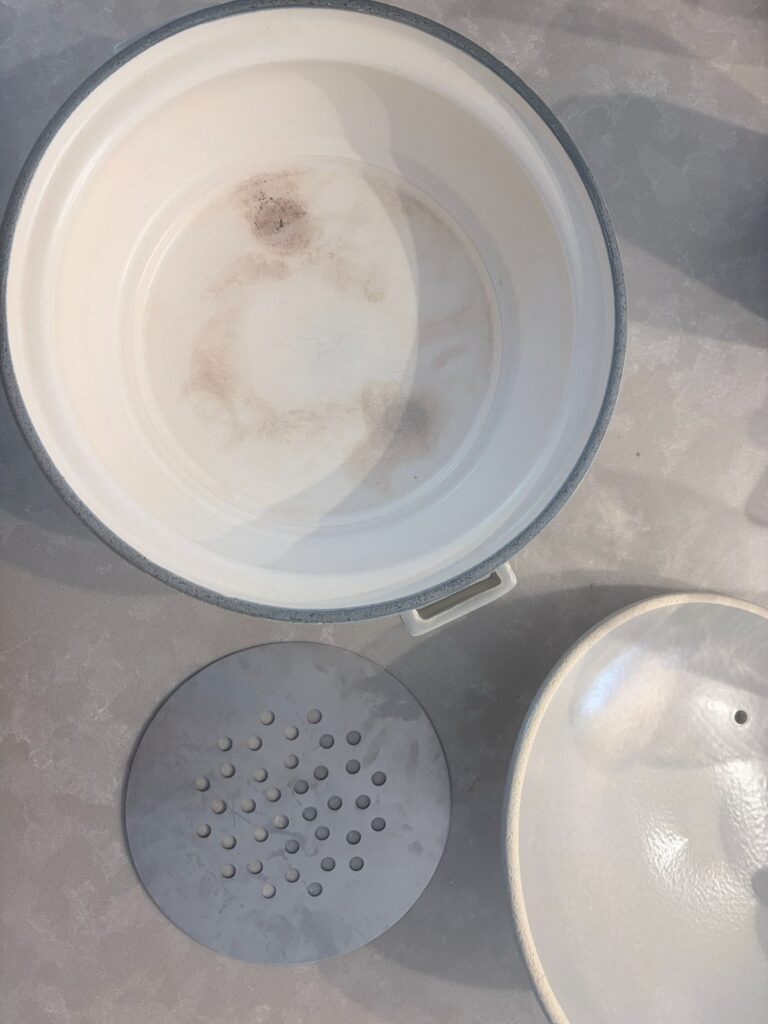
- It is marked induction compatible, and I have never verified that, because I do not own an induction hob. The accessory I assumed was the heating plate turned out to be a steamer insert
- Not dishwasher safe, which the maker states clearly
- Thick, starchy things catch on the bottom. Turning leftover zosui into risotto with cheese scorches it if I am not stirring
- Hot pot is hot pot. It is very good and it is the same every time, and I get bored of it before winter ends
That last one is not a fault of the pot, but nobody selling you a donabe will say it, and it is worth knowing before you spend $200.
What size
Japanese donabe are sold in gō numbers, which describe the diameter, not the volume.
| Size | Feeds |
|---|---|
| 6–7 gō | 1–2 people |
| 8–9 gō | 3–4 people |
| 10 gō and up | 5+ |
Mine is 9-gō and comfortably does three or four. Buy for the number of people you usually cook for, not the largest gathering you can imagine. An oversized clay pot is heavier, slower to heat, and takes more liquid to fill properly.
So which is the best donabe
For most people asking the question in English, honestly: the Kamado-san deserves its reputation if you want rice and you cook on gas. That combination is what it was built for and a million buyers is not nothing.
If any part of that sentence does not describe you — you want hot pot at the table, or you have induction, or you are not going to hand-wash and air-dry a porous clay pot for the next ten years — then the honest answer is that a plain glazed Banko pot like mine will serve you better, cost less, and ask less of you.
I would rather send you to the right category than pretend I have tested every pot in it.
Frequently asked
Is Kamado-san worth the money?
For rice, on gas, by reputation and design pedigree — yes, though I have not owned one. For hot pot or on induction, you are paying for engineering aimed at a job you are not doing.
Can I use a donabe on an induction hob?
Only if it is specifically built for it. Clay does not heat on induction; compatible pots rely on a steel plate. Take a magnet to the plate before you trust the label.
How much should I spend?
A Kamado-san runs $180–250 outside Japan. An ordinary glazed Banko pot like mine is a fraction of that and will handle hot pot, zosui and udon perfectly well. The premium buys craft, rice performance and longevity — not general usefulness.
Do I have to season it?
Depends on the pot, and the reasoning you have read is probably about unglazed clay. The full answer is here.
Is a donabe worth owning at all?
If you will use it more than twice a winter, yes. Mine earns its cupboard space because it is the least effort of anything I cook — everything goes in, the lid goes on, and there is one pot to wash.
Related: How to Season a Donabe (And Which Rules Apply to Yours) · A Japanese Cast Iron Pan, Six Years On
Last updated: August 18, 2026. Found something wrong? Tell me — corrections get published.