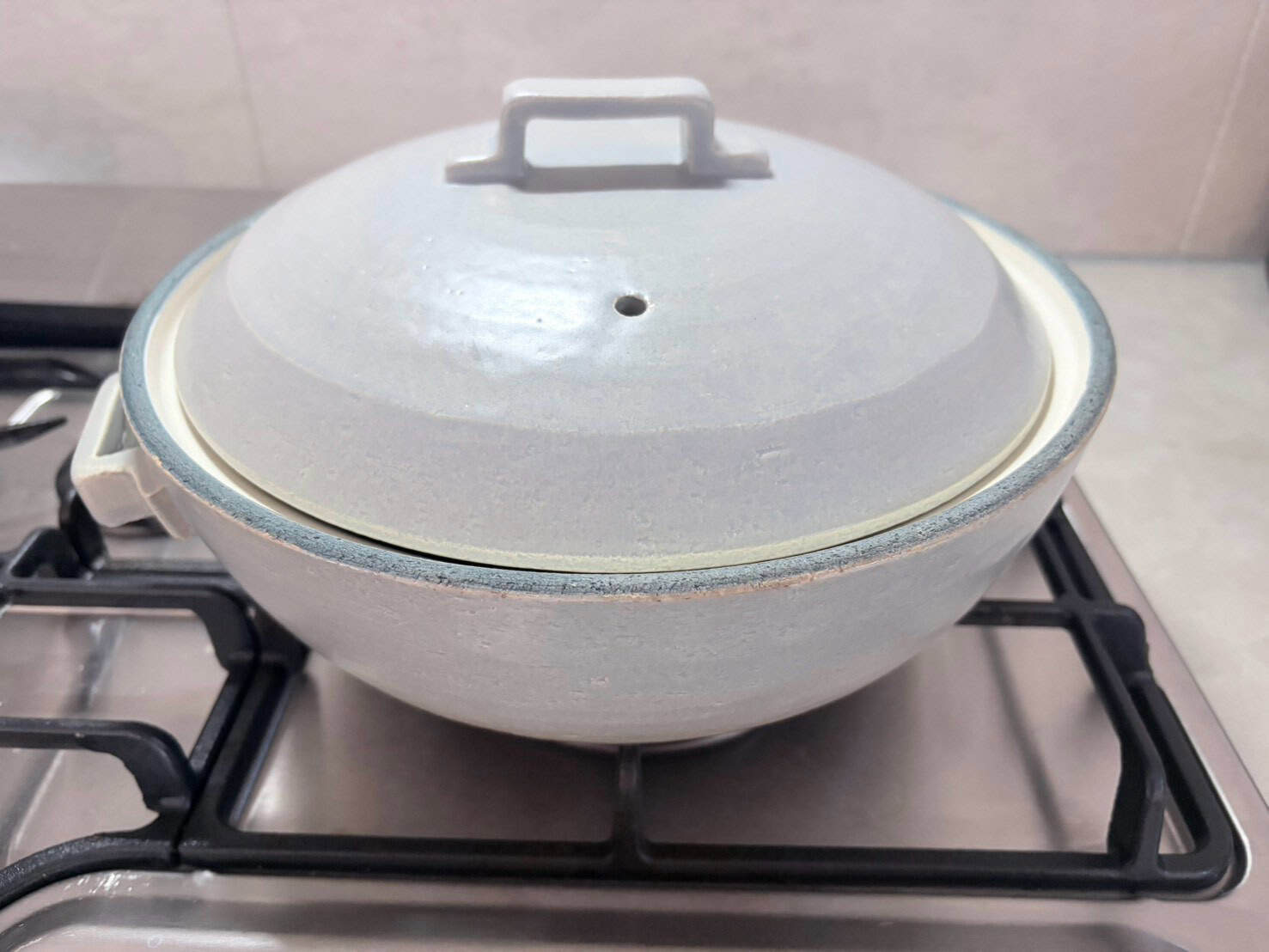
How to Season a Donabe (And Which Rules Apply to Yours)
There are no affiliate links in this article — I have no relationship with anyone who sells donabe. How this site makes money.
Search for how to season a donabe and every guide tells you the same three things. Simmer rice porridge in it before you cook anything. Never use soap on it. Never leave it soaking.
I have been breaking two of those for two winters. The pot is fine.
That is not a boast and it is not permission to ignore the guides. It is a clue. Those rules describe a different pot from the one most people are buying now, and the difference is visible in about four seconds if you know where to look.
Start by looking at two surfaces
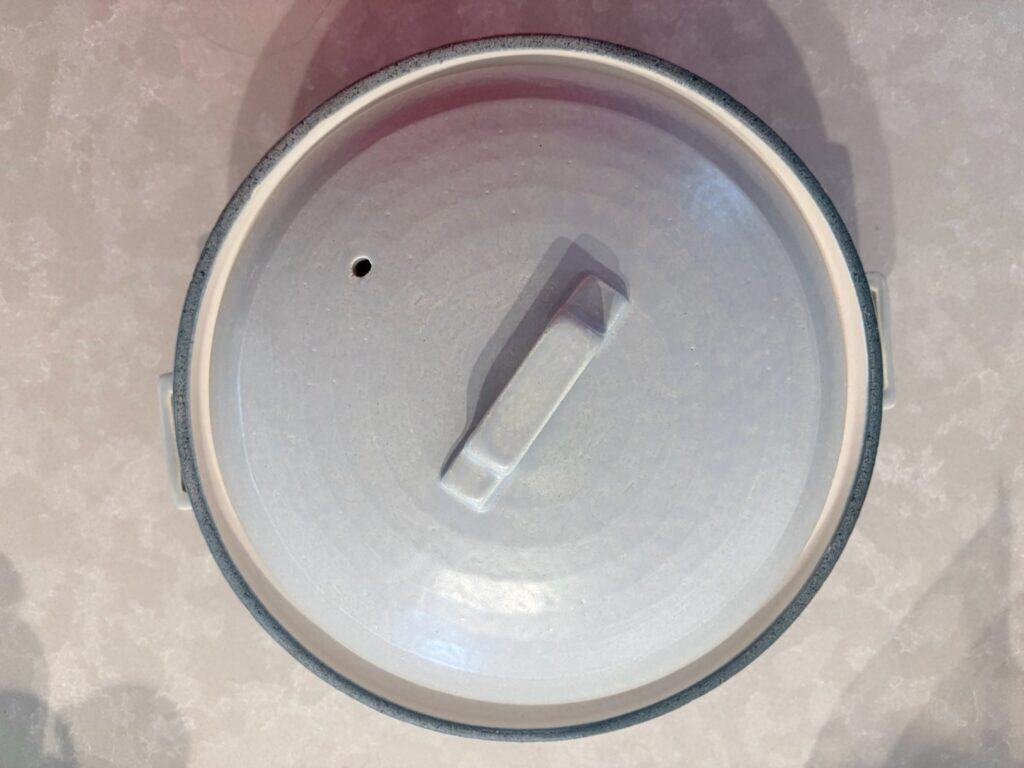
Turn your donabe over, then look inside it.
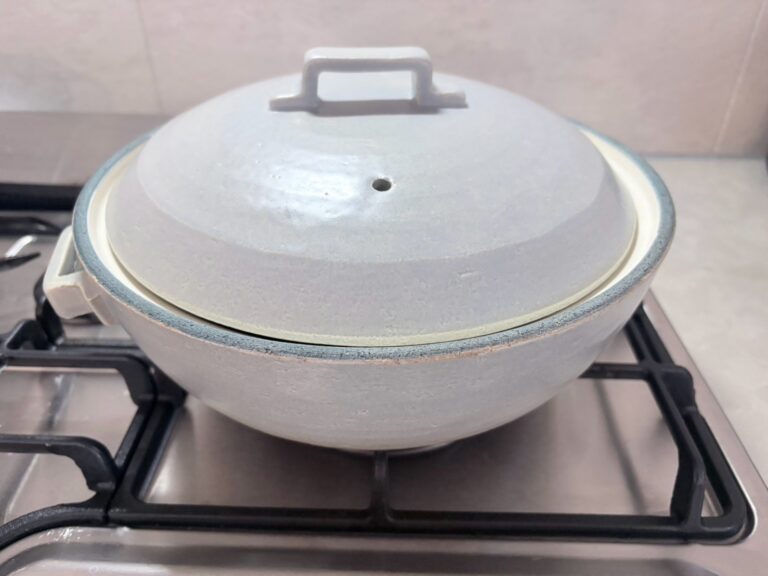
Mine is glazed white on the inside and bare unglazed clay underneath. That is one pot with two completely different surfaces, and almost every rule you have read applies to only one of them.
The glazed interior is sealed. Water does not soak into it, and neither does anything else. The unglazed base is not sealed at all — it drinks water, which is exactly why it matters what state it is in when it meets a flame.
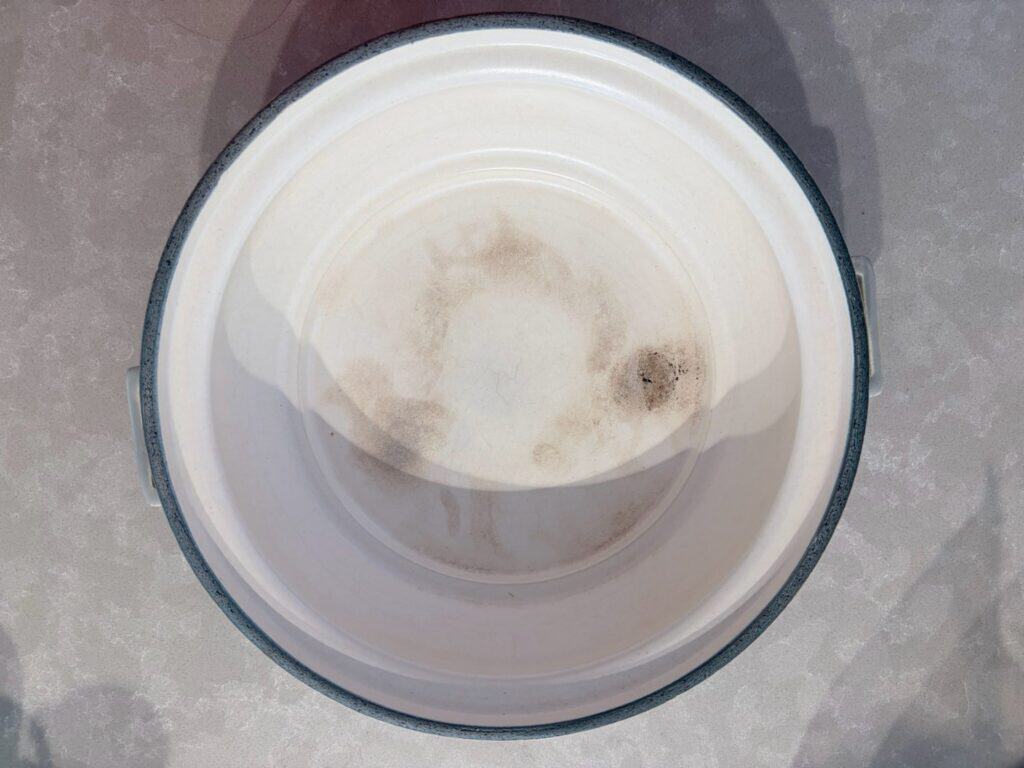
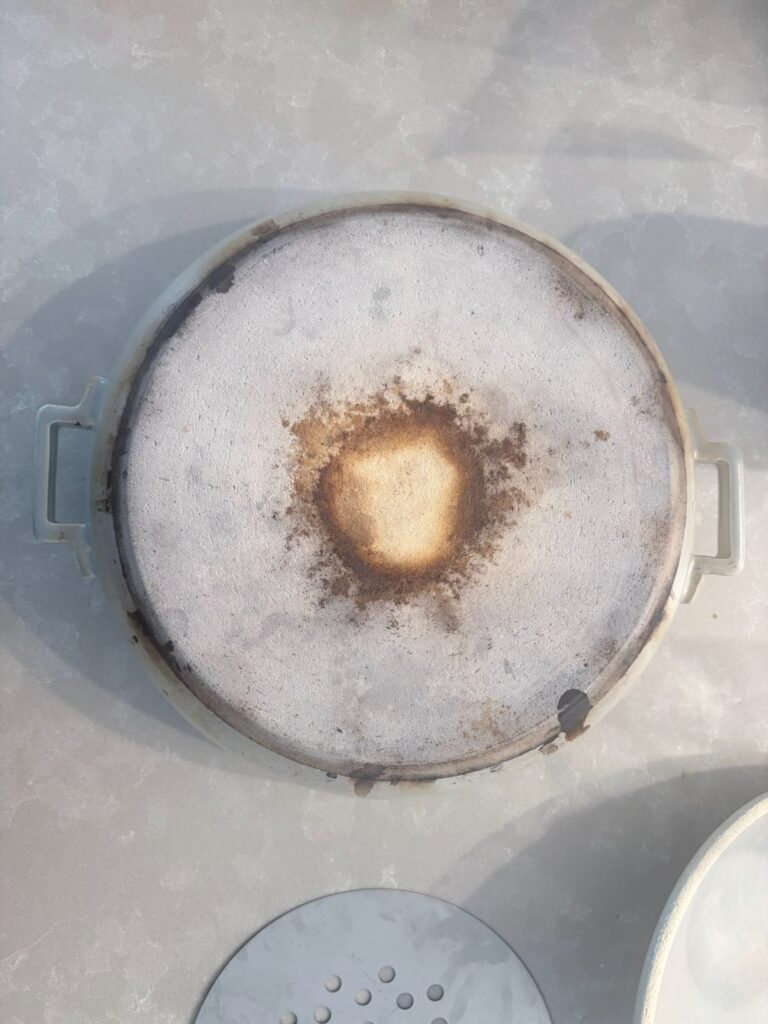
Once you have seen that, the advice sorts itself out. The rules about the inside can be relaxed. The rules about the outside cannot.
Some traditional Iga and Banko pots are unglazed or only partly glazed inside, and for those the standard advice is correct as written. Check yours before you decide which set you are living under.
How to season a donabe, and what the step is actually doing
Here is the version everyone publishes. Fill the pot most of the way with water, add cooked rice or a couple of spoons of raw rice, bring it slowly to a boil, simmer for an hour, let it cool completely, then wash and dry it. Repeat two or three times if you want to be thorough. The stated reason is always the same: the starch fills the microscopic pores in the clay so the pot does not seep or crack.
What I did was simpler. I used potato starch — katakuriko — rather than rice. It went cloudy and then noticeably slimy, which is the part I remember most clearly. Starch is starch, and in Japan potato starch and plain flour are both ordinary choices alongside rice water. I have not seen either suggested in an English-language guide, which is a small sign of how narrow the translated version of this advice has become.
Should you do it at all? The maker of my pot says to, in the instructions, before first use. So I did. I would do it again.
But I want to be straight about the reasoning, because the reasoning is what does not survive contact with my actual pot. The pores that starch is supposed to fill are on the unglazed clay. The inside of mine is under a layer of glass. Sealing a surface that is already sealed is not obviously doing anything, and I have no second pot that I left unseasoned to compare against. So the honest position is: the maker says to, it costs an hour and a spoonful of starch, and I cannot tell you what it bought me.
Do you need to do it again? Not on a schedule. Re-seasoning is what you do when the pot starts seeping or drinking water, not something you book in annually. Mine has been through two winters without it and shows no sign of needing it.
The rules I break
Soap. I wash the inside with detergent and a sponge, the way I wash everything else. Two winters, no ill effects. The prohibition makes sense for unglazed clay, which would absorb the detergent and hand it back to your next meal. Glaze does not absorb anything.
Soaking. When I scorch something onto the bottom, I fill it and leave it. That is the only thing that shifts baked-on rice, and again, the warning is about clay drinking dirty water. Mine cannot.
I am describing what I do, not issuing you a permit. If your pot is unglazed inside, keep both rules exactly as written.
The same thing happened to me with an iron pan, in the opposite direction: six years, and the rule I should have broken.
The rules I keep
Never put it on heat wet. This one is not negotiable and it is the rule the others get confused with. The base of my pot is bare clay. Wet clay plus a flame is how a donabe cracks. I dry the underside before it goes near the burner, every time.
Let it dry before it goes away. I am not rigorous about this — sometimes it air-dries on the rack, sometimes I towel it and leave it out — but it does not go into the drawer damp. Unglazed clay that gets put away wet grows mould, and that is a smell you do not get back out.
No dishwasher. The maker says no, and the reason is the same rule again: the unglazed base soaks up water and then sits through a hot drying cycle. It is the wet-pot-on-heat problem wearing a different hat.
No thermal shock. No dry heating, no cold water into a hot pot, no hot pot onto a cold wet counter. I have never tested how much abuse mine would take and I do not intend to.
That crack in the glaze is not a crack in the pot
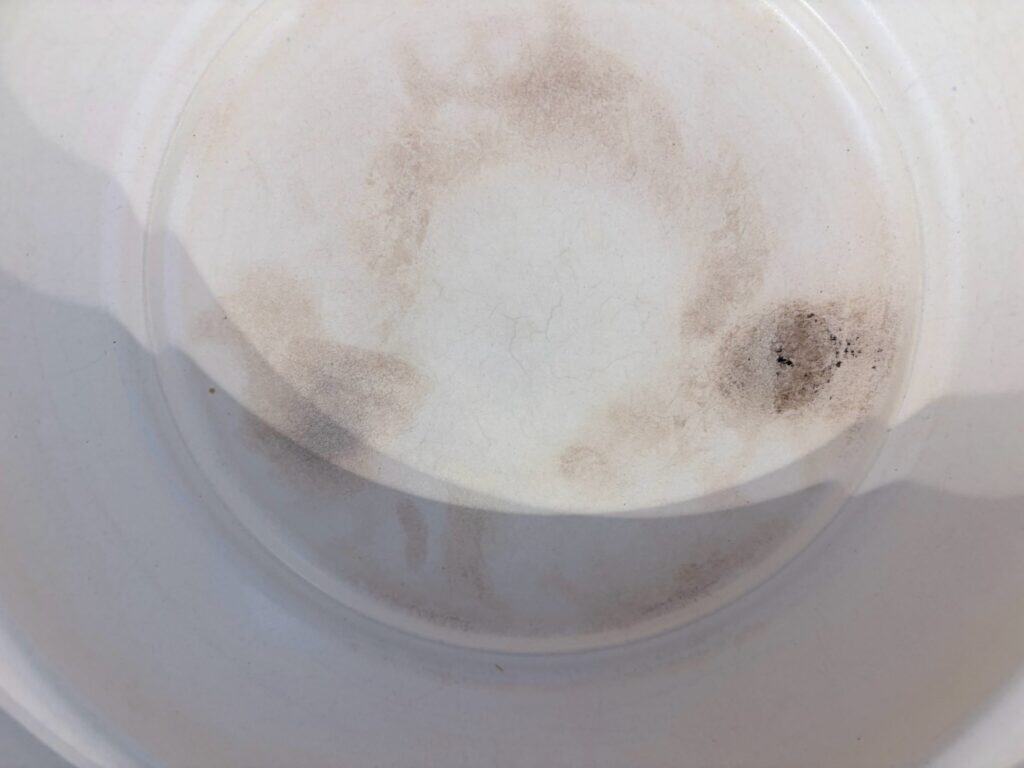
There is a web of fine lines across the glaze inside mine. It is called crazing, it comes from the glaze and the clay beneath it shrinking at slightly different rates, and it is normal. It will appear on almost any glazed donabe eventually.
A crack you should worry about looks different:
- It shows on both the inside and the outside, which means it goes through
- The pot leaks, or the base is mysteriously damp after you dried it
- The line runs all the way to the rim
There is a test and it costs you nothing. Fill the pot most of the way with water and leave it overnight. In the morning, look at the underside. Dry means the crazing is only in the glaze and you can carry on. Damp means the pot is finished.
Mine came through dry. Two winters, plenty of crazing, no leak.
The brown staining in the bottom of mine is in the same category — a record of use rather than damage. It has not come out and I have stopped trying.
What it is actually like to live with
Mine is a 9-go pot: about 3 litres, 24cm across inside, 2.75kg empty. That size feeds three or four. It is Banko ware from Mie, which is where something like 80% of Japan’s donabe are made.
In winter it comes out once or twice a week. Hot pot, zosui, sometimes udon.
The honest complaint is that hot pot tastes like hot pot. You put dashi and vegetables and meat in a pot, and what comes out is very good and almost exactly the same as it was last time. I am bored of it well before winter ends. What keeps it in rotation anyway is that it is the least effort of anything I cook — everything goes in, the lid goes on, and there is one thing to wash afterwards.
The one thing that reliably goes wrong: turning leftover zosui into risotto by adding cheese. Thick, starchy, dairy-heavy things catch on the bottom, because a clay pot holds its heat rather than responding to you turning the dial down. If you are cooking anything that wants stirring, stir it more than you think you need to, and take it off the heat earlier than you would a metal pan.
Storage is unglamorous. It lives in a kitchen drawer.
A note on induction
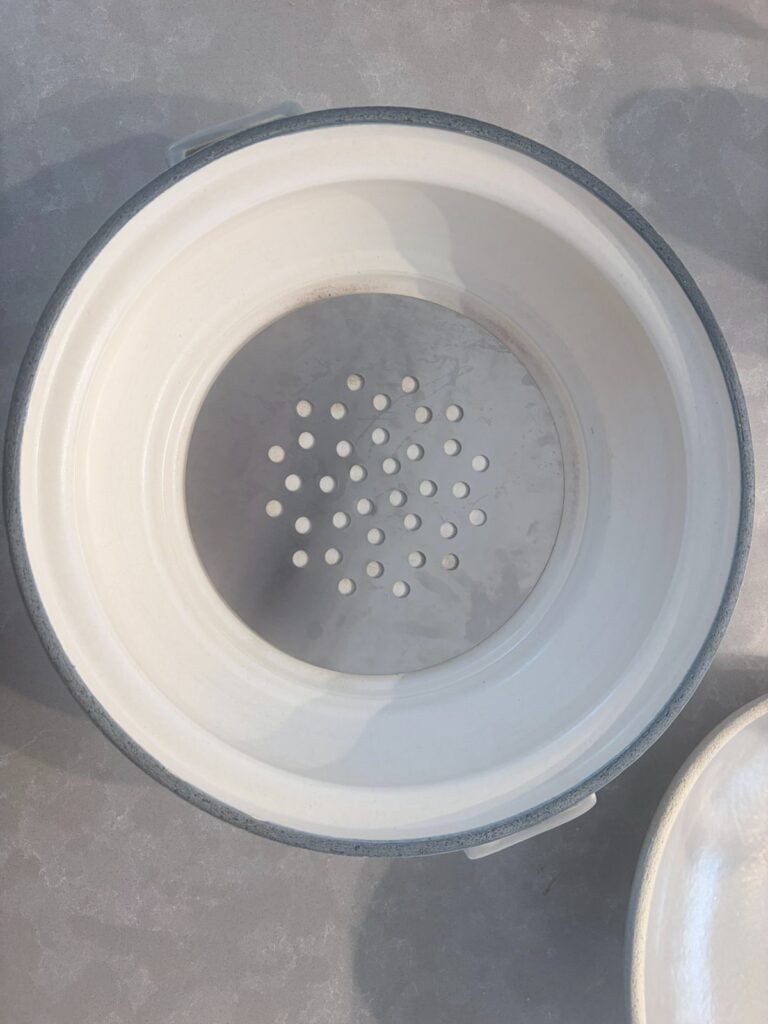
Mine is sold as induction compatible. I have never tested that, because I do not own an induction hob. Everything here happened on gas, which is also why the base is scorched in a ring.
A perforated aluminium disc came with the pot. I had assumed for a while that this was the induction part. It is not — it came as a steamer insert, and aluminium does not heat on a domestic induction hob anyway.
If you are buying a donabe to use on induction, that is worth knowing. Compatible pots generally rely on a separate steel heating plate, and steel is magnetic. So take a magnet with you, or ask before you order. A plate that does not attract a magnet will not heat on a normal induction hob.
Which donabe to actually buy, including which ones work on induction: Best Donabe
Frequently asked
Do I really have to season a new donabe?
If yours is unglazed inside, yes, and the usual reasoning applies to it directly. If it is glazed inside, follow the maker’s instructions — mine said to season it, so I did — but understand that the “filling the pores” explanation is describing the other kind of pot.
Can I use flour or potato starch instead of rice?
In Japan both are ordinary. I used potato starch. Any of them puts starch into the water, which is the entire mechanism.
How often should I re-season it?
When it starts seeping, not on a calendar. Two winters in, mine has not needed it.
Is soap really that bad?
On unglazed clay, yes. On a glazed interior it is hard to see what harm it does, and I have been using it for two winters. Your pot decides this, not the internet.
Why can’t it go in the dishwasher?
The unglazed base absorbs water and then sits through a hot drying cycle, which is the same thermal problem as putting a wet pot on a flame. Mine is marked as not dishwasher safe.
The glaze inside is covered in fine cracks. Is it ruined?
Almost certainly not. That is crazing. Fill it with water overnight and check the underside in the morning — dry, and you are fine.
Related: The Copper Tamagoyaki Pan I Wrapped in Newspaper and Forgot / Best Donabe
Last updated: August 18, 2026. Found something wrong? Tell me — corrections get published.