7 Mistakes That Ruin a Japanese Knife
A Japanese knife will outlast you if you let it. Most of them don’t get that chance.
The Japanese knife mistakes that actually cost people their edge are rarely one dramatic accident. They’re habits carried over from a knife that could take it.
European kitchen knives run softer — around 56–58 HRC against 60–63 for most Japanese ones. Softer steel bends where harder steel breaks. Everything below follows from that one difference. The full explanation of the trade-off is here.
Here are the seven that actually cost people their edge, and what each one is doing.
1. The dishwasher
The single most destructive thing you can do, and the most common.
Three separate mechanisms are at work. Heat cycles the steel and can affect the temper at the thin edge. Detergent is far more aggressive than dish soap — it’s designed to strip baked-on grease, and it will pit even stainless over time. Movement knocks the blade against plates and cutlery for an hour, and a 62 HRC edge chips on impact rather than rolling.
The handle suffers too. Wooden handles swell, dry, and eventually crack or loosen at the tang.
There is no dishwasher-safe Japanese knife. Some marketing says otherwise. Wash it by hand, in about fifteen seconds, and dry it.
2. Glass, stone, or ceramic boards
If you cut on glass, you are grinding your edge away with every stroke.
Glass is dramatically harder than knife steel. Every contact takes microscopic material off the apex. A knife that would hold an edge for months goes dull in weeks, and can chip outright.
Bamboo deserves a mention here too, because it gets recommended constantly as the eco-friendly choice — and because the usual defence of it is a good example of a specification that misleads.
Bamboo’s Janka hardness sits around 1,380 lbf against roughly 1,450 for hard maple. On paper it is softer, and that is the number board makers quote.
It is also not the number that matters. Bamboo is a grass, and it accumulates silica — the same mineral in sand and glass — in its fibres. Janka hardness measures how much a surface resists denting. It says nothing about how much that surface abrades. Your edge only cares about the second one.
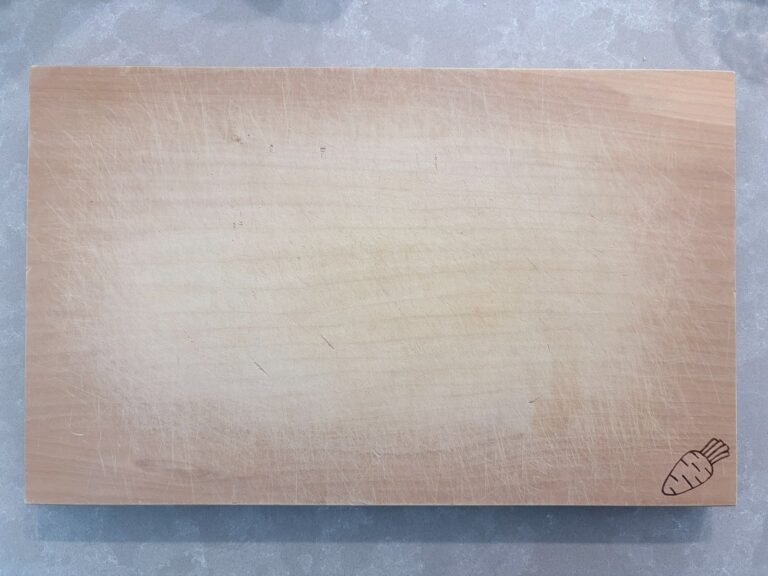
Use end-grain or edge-grain wood, or a soft plastic board. Hinoki, if you want the Japanese answer. The board should be softer than the knife. That’s the whole rule.
3. Bones, frozen food, and hard squash
A gyuto is not a cleaver. A santoku is not an axe.
Hitting bone with a thin, hard blade produces exactly the failure mode you’d predict: the edge has no way to deform around the obstacle, so a piece of it leaves. You get a chip, and fixing a chip means grinding the entire edge down to the depth of the crater. On a 210mm knife that’s a serious amount of steel and an afternoon of work.
Frozen food is the same problem with a wider contact area. So is a hard winter squash if you force it.
Use a heavier Western knife or a cleaver for anything with bone. Let hard things thaw. If you must cut squash, score it and use pressure from the spine rather than driving the edge through.
4. Pull-through sharpeners
Those V-shaped gadgets with tungsten carbide teeth are designed for soft Western steel. They work by scraping metal off aggressively at a fixed, fairly steep angle.
On a Japanese knife, two things go wrong. The angle is wrong — usually much steeper than the knife was ground to — so you’re reshaping the edge into something blunter every time you use it. And the scraping action tears at hard steel rather than abrading it cleanly, which leaves a ragged edge that feels sharp for a day.
Use a whetstone. It’s slower to learn and it’s the only thing that maintains the geometry the knife was made with.
Honing rods need a caveat too. A steel rod realigns a rolled edge, which is what soft European steel does. Hard Japanese steel doesn’t roll much — it chips — so a rod does less good, and a ribbed steel rod can do harm. A ceramic rod used lightly is the safer version.
5. Leaving it wet
Obvious for carbon steel, where you’ll see discolouration within a day.
Less obvious for stainless. “Stainless” means resists corrosion, not immune to it. Leave a stainless blade in a sink with acidic residue on it — lemon, tomato, onion — and you can still get spotting and eventually pitting.
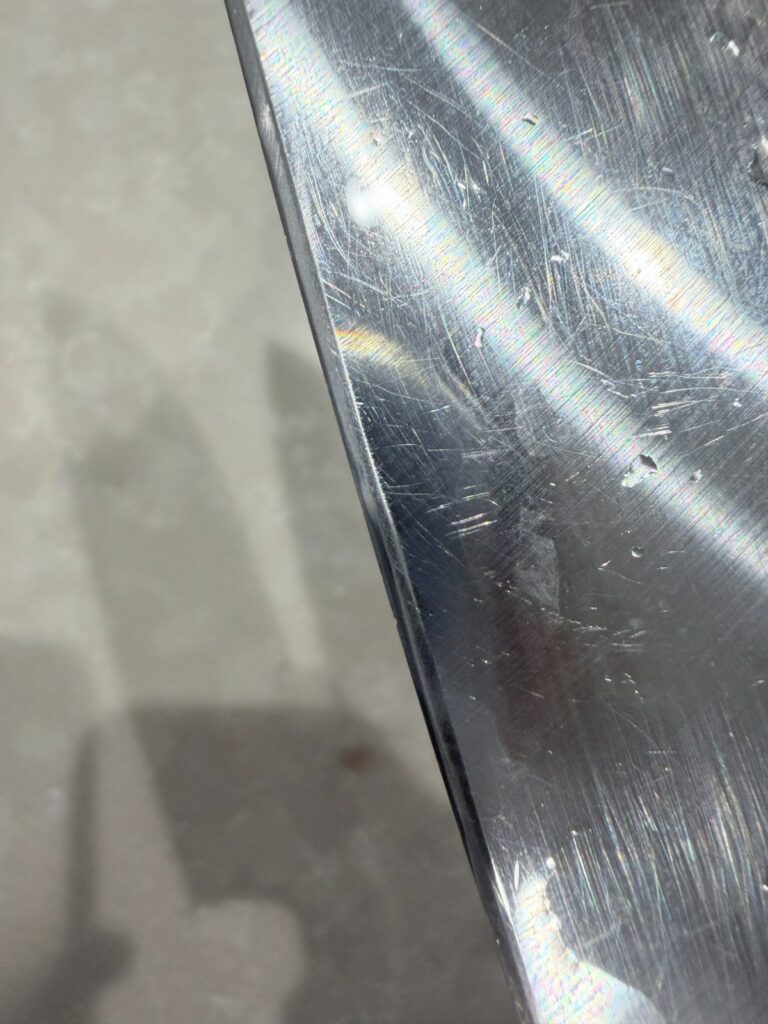
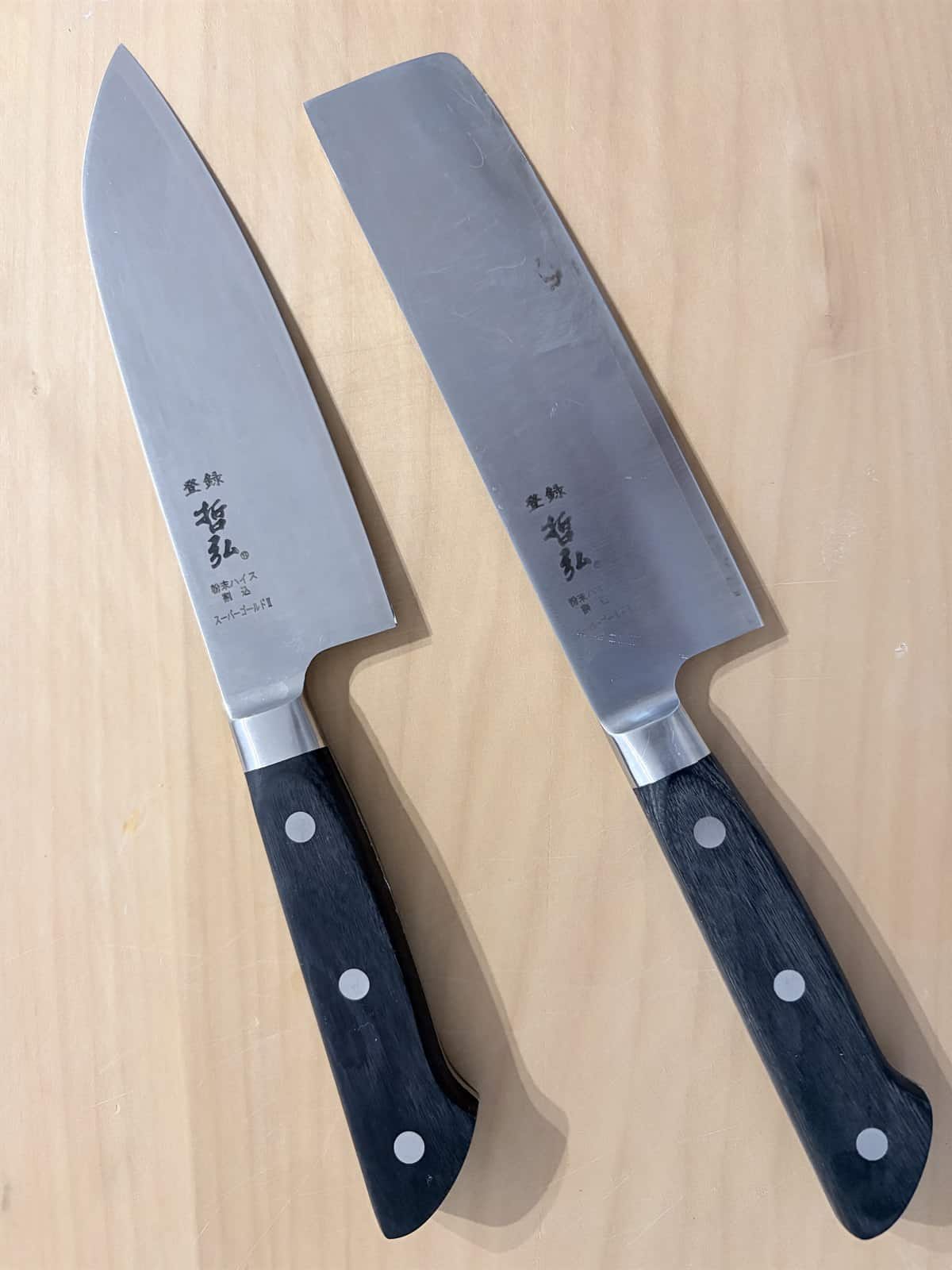
I have this on my own knives. Mine are SG2, a premium powdered stainless, and after a year of household use one of them has picked up staining that stainless is not supposed to allow. It’s cosmetic rather than structural, and it’s a fair record of how carefully I’ve actually treated them.
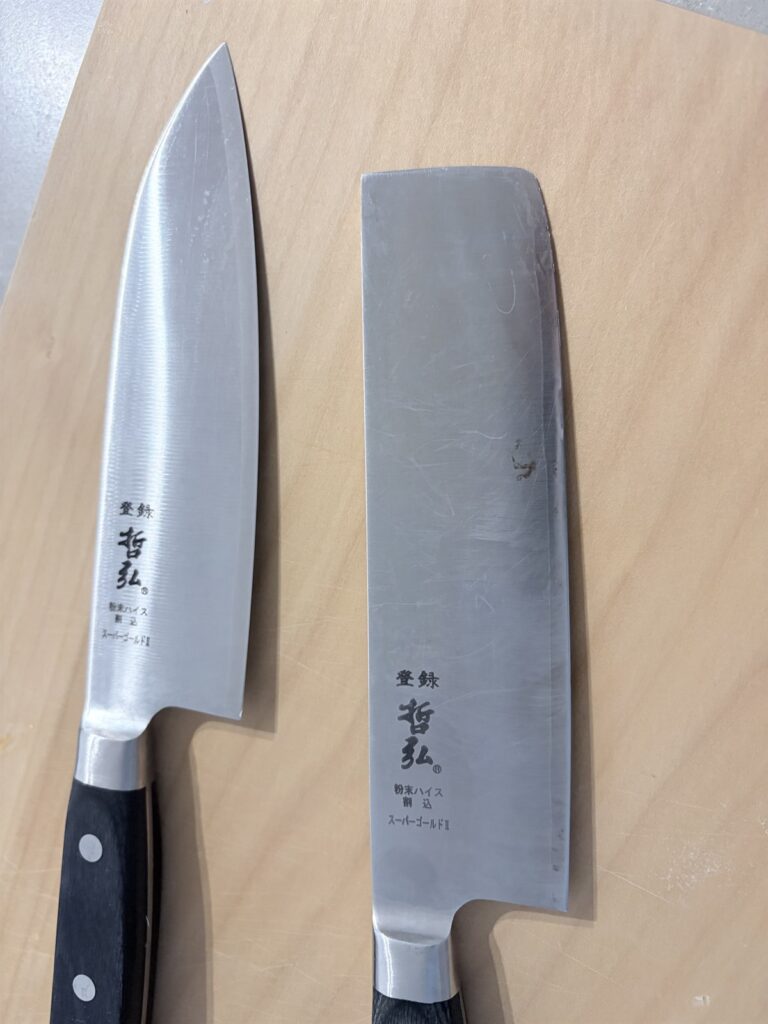
that “stainless” is not supposed to prevent — and doesn’t.
Wash, dry, done. Fifteen seconds.
6. Loose in a drawer
Two knives rattling against each other in a drawer will chip each other, and one of them will eventually find your hand when you reach in.
Options, roughly in order of cost:
- A saya — the wooden sheath many Japanese knives ship with. Keep it.
- A blade guard — cheap plastic or cardboard. Fine.
- A magnetic strip — good, if you place the blade against it deliberately rather than slapping it on.
- An in-drawer knife tray — the practical answer if you don’t want things on the wall.
What matters is that the edge touches nothing hard between uses.
7. Scraping the board with the edge
This is the one almost nobody knows they’re doing.
You finish chopping an onion, and you use the blade to sweep it off the board into a pan. Perfectly natural motion. And you’ve just dragged your cutting edge sideways across a hard surface, which rolls it over.
Do it after every prep session and you’re undoing your sharpening between sharpenings.
Flip the knife and use the spine. Same motion, no contact between the edge and the board. It takes about a week to become automatic and it noticeably extends how long an edge lasts.
Japanese knife mistakes at a glance
| Do this | Not this |
|---|---|
| Hand wash, dry immediately | Dishwasher |
| Wood or soft plastic board | Glass, stone, ceramic, bamboo |
| Heavier knife for bones | Forcing a thin blade through |
| Whetstone | Pull-through sharpener |
| Dry it now | Leave it in the sink |
| Saya, guard, or magnetic strip | Loose in a drawer |
| Scrape with the spine | Scrape with the edge |
None of this is difficult. It’s about fifteen seconds per use and one habit change. What it buys you is a knife that stays sharp for months instead of weeks, and lasts decades instead of years.
Frequently asked
I’ve already done some of these. Is the knife ruined?
Almost certainly not. Dullness is fixable on a stone. Light staining cleans off. Small chips can be ground out, though it costs steel. The knife is probably fine — just stop.
My knife already has a chip. What now?
Small chips can be removed on a coarse stone by grinding the edge down until the chip is gone, which takes patience and removes real material. Anything larger than about a millimetre is worth taking to a professional sharpening service.
Is a magnetic strip bad for the blade?
No, the magnetism doesn’t harm steel. The risk is mechanical — slapping a blade flat onto a metal bar chips edges. Place the spine first, then roll the blade onto the strip.
How often should I sharpen?
When it stops cutting well, which for home use is typically every few months. You’ll learn to feel it before you can measure it.
Related: Japanese Knife Steel Explained · Best Whetstones for Japanese Knives · How to Sharpen a Japanese Knife
Last updated: 15th August, 2026. Disagree with something here? Tell me — corrections get published.