SG2 knife review: Tetsuhiro santoku and nakiri from Sanjo
Two years, no sharpening, and one of the two knives has barely been touched. What premium powdered steel is actually like to live with, including the parts that are not flattering.
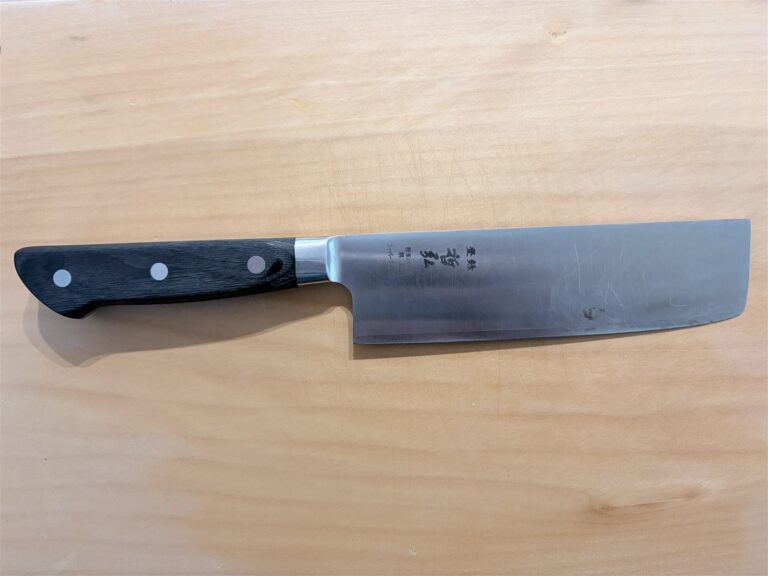
Two years, no sharpening, and one of the two knives has barely been touched. What premium powdered steel is actually like to live with, including the parts that are not flattering.
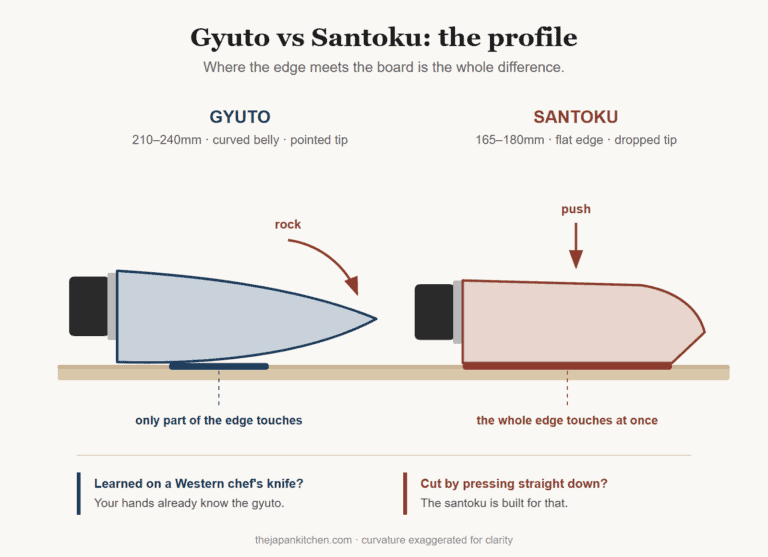
It is not a beginner-versus-advanced question. Santoku or gyuto comes down to how you already cut — rocking or pressing straight down — and buying against that habit means fighting your own hands.
Shape, steel, and the trade-off nobody states plainly: a harder edge lasts longer and chips instead of rolling. Everything you need to decide before you spend the money.
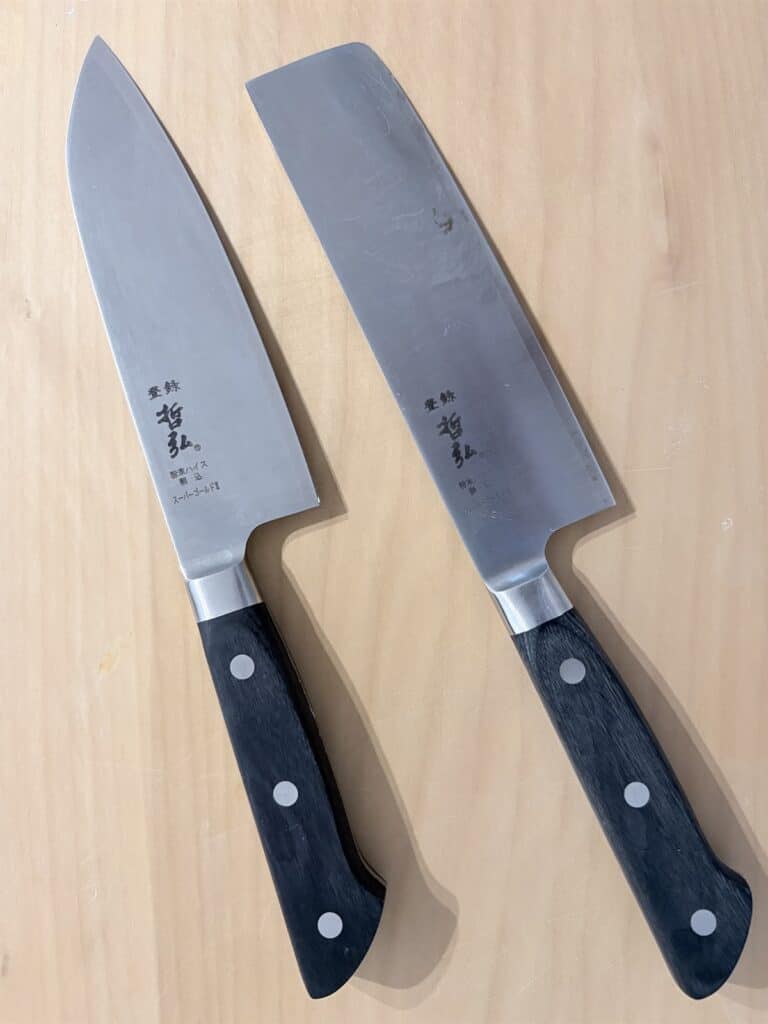
The brand stamped on the blade is often not the workshop that forged it. What Sakai, Seki, Echizen, Tosa and Sanjo actually make — and what the region does not tell you.
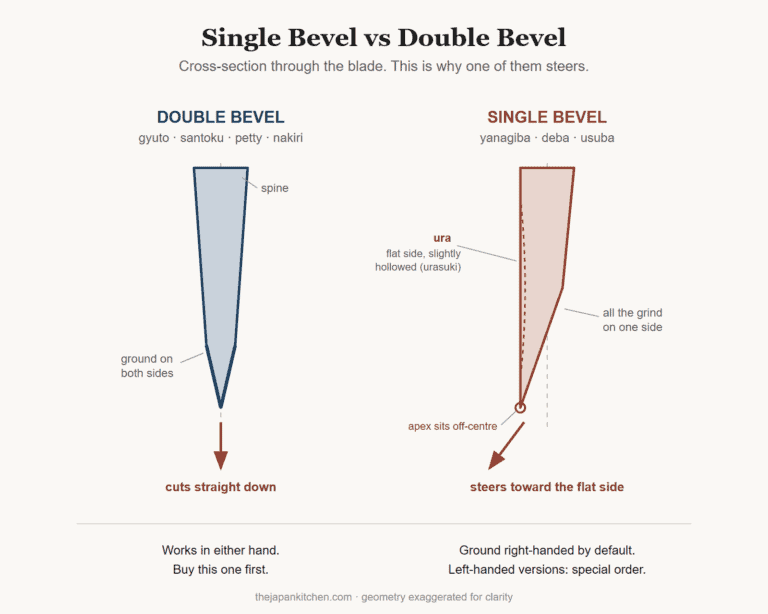
Buy double bevel. Almost certainly. Here is the geometry that makes one of them steer sideways, and why left-handed buyers need to check before they order.
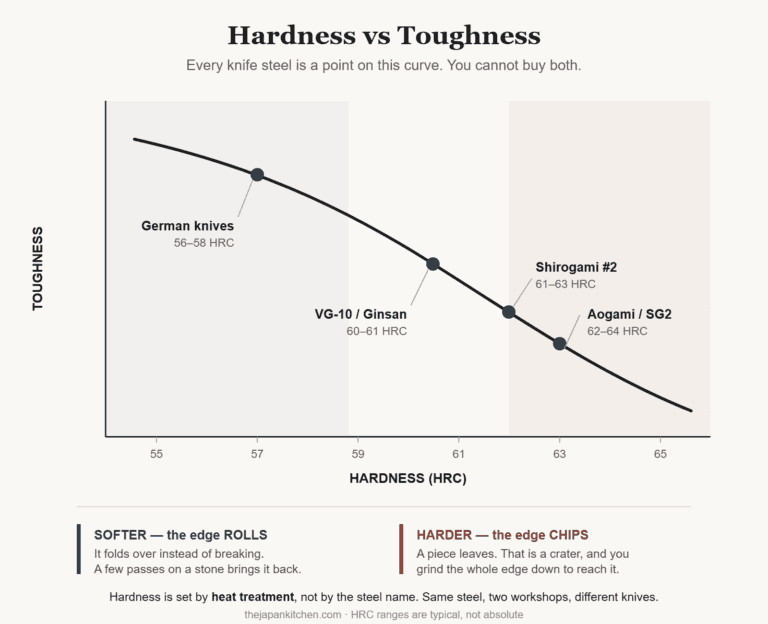
White #2, Aogami Super, VG-10, SG2 — presented like grades on a report card. There is no ranking. There is a trade-off curve, and each name is a different point on it.